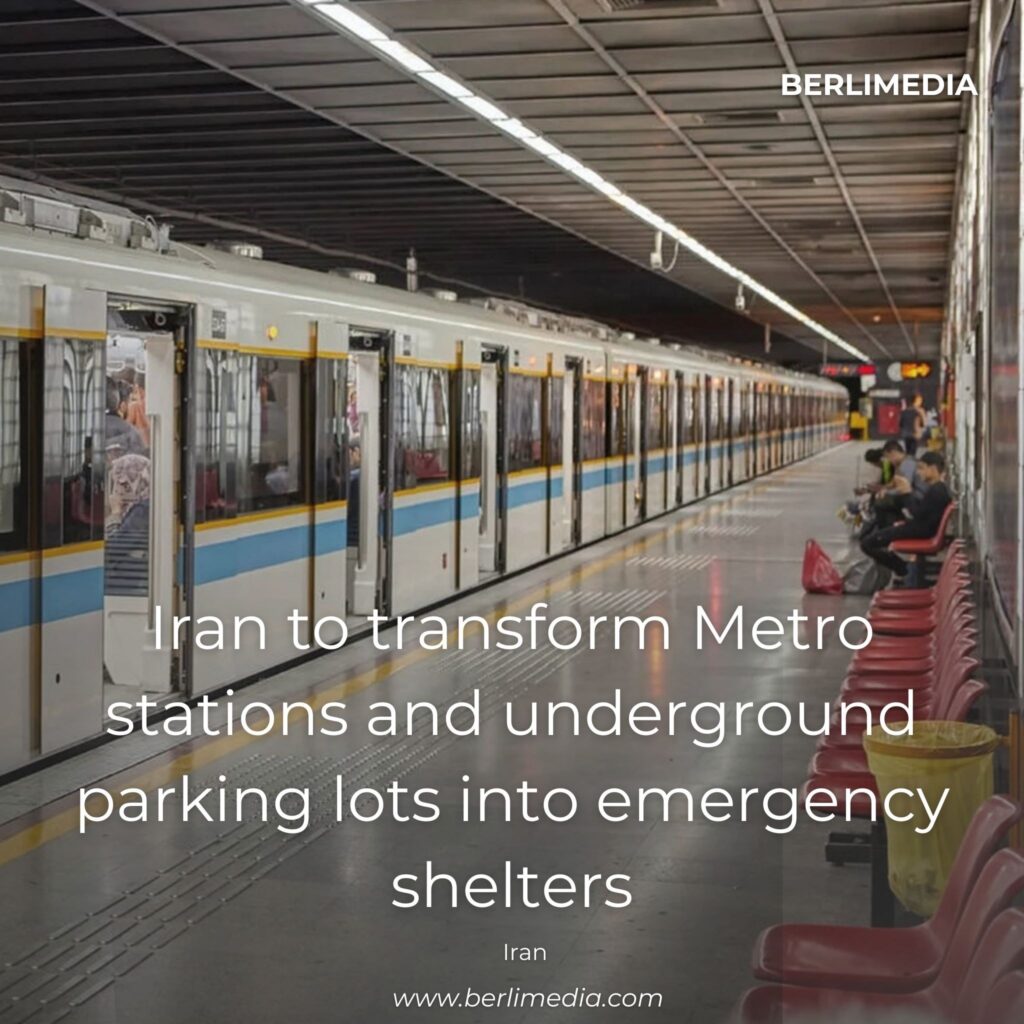
Iran is actively transforming parts of Tehran’s underground infrastructure — including metro stations and underground parking facilities — into emergency shelters amid escalating regional tensions and fears of a possible military confrontation.
Why This Is Happening
Officials in Tehran, led by Mayor Alireza Zakani, have launched a civil defense initiative aimed at protecting civilians in the event of a security crisis. As part of this plan, certain metro stations across the city are being prepared with basic emergency supplies and infrastructure to act as public shelters. Similarly, underground parking lots are being adapted so they can quickly serve as refuges if needed during an attack.
This initiative stems from Tehran’s growing concern over heightened military tensions with the United States and Israel, which have repeatedly traded threats and actions in the region. The government says these measures are proactive steps to safeguard residents and strengthen civil defense readiness.
What’s Being Converted
- Metro Stations: Dozens of Tehran Metro stops are being outfitted with shelter capabilities — this includes space designation, signage, and provisions such as water and basic facilities where possible.
- Underground Parking Lots: Large subterranean parking areas are seen as ideal dual‑use spaces because they are spacious, structurally robust, and already part of the city’s built environment; they can be rapidly adapted when a crisis arises.
Broader Context
This development is part of a larger pattern in Iran’s civil defense preparations that also includes emergency alert testing and planning for mass sheltering. The moves reflect a growing perception among Iranian authorities that geopolitical pressures could escalate into direct threats against the country.
Why It Matters
- Civil Defense Upgrade: By repurposing existing infrastructure, Iran is boosting its capacity to protect civilians without constructing entirely new facilities — a strategy that can be faster and more cost‑effective under pressure.
- Signal to Public & World: Making these conversions public signals to residents that authorities are preparing for worst‑case scenarios, and also demonstrates Tehran’s readiness to respond to perceived threats.
- Urban Planning & Security: Turning regular urban spaces like metro stations into shelters blends day‑to‑day life with emergency preparedness — a trend seen in other countries facing security concerns but notable given Iran’s current strategic environment.