
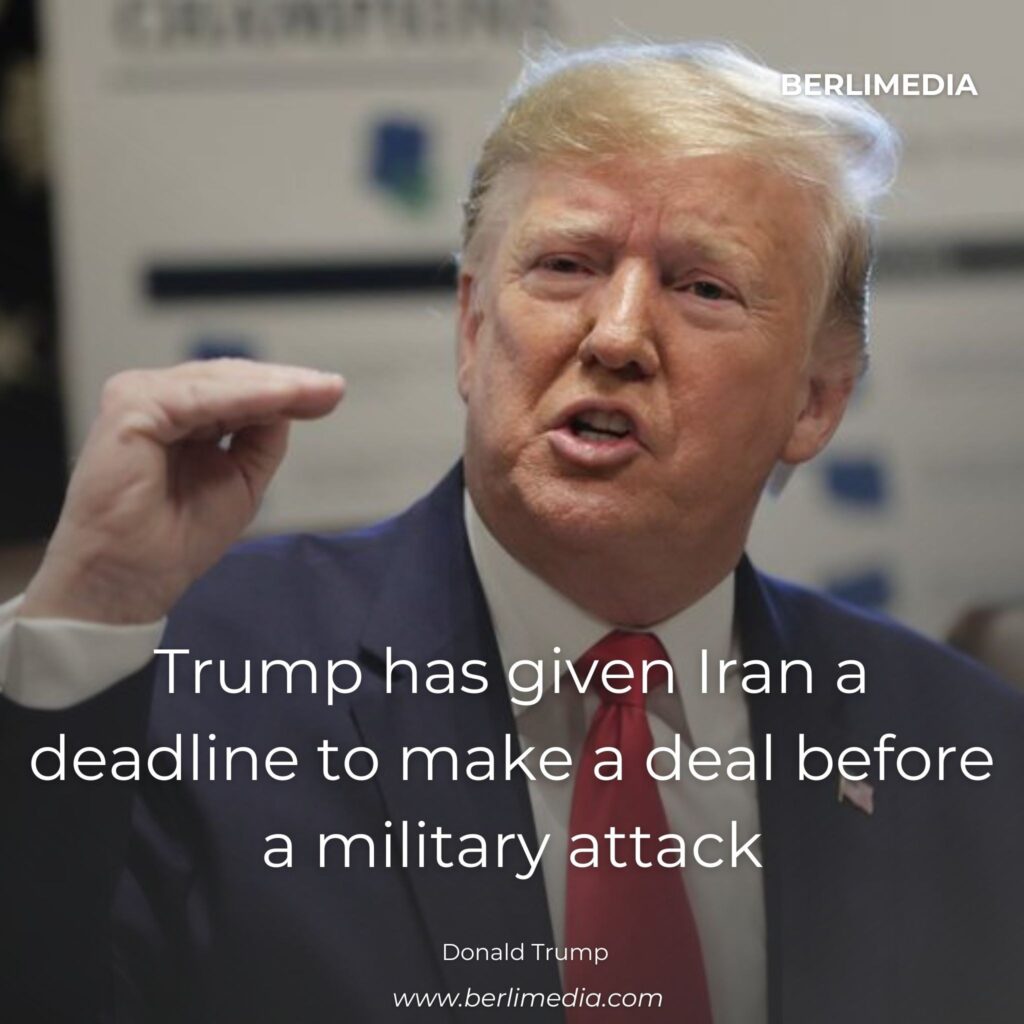
The United States and Iran are locked in one of the most dangerous diplomatic standoffs in recent years. In public statements made over the past few weeks, President Donald Trump has indicated that Iran has been given a “deadline” to agree to a new deal — or face the prospect of U.S. military action. Yet the deadline’s specifics remain vague, known “only to them,” according to Trump.
Trump’s comments are part of a strategy that pairs diplomatic negotiations with overt military pressure — including the movement of significant naval forces toward Iran and a large U.S. military presence in the Middle East.
On the diplomatic track, U.S. officials have convened nuclear negotiations with Iranian counterparts in Oman, with both sides describing initial talks as a “good start.” But Trump has repeatedly warned Tehran that time is running out and that a failure to reach a deal could trigger military options.
Behind the scenes, Trump has refused to publicly define the deadline’s timeline, telling reporters that only Iranian leaders know the exact schedule. This ambiguity fuels uncertainty about whether the U.S. is signaling serious intent to use force or simply creating leverage in negotiations.
What the “Deadline” Actually Means
Right now, there’s no publicly announced deadline with a concrete date or conditions. What’s happening instead is a mix of:
🧨 Pressure Through Military Posturing
Trump has described the deployment of a large U.S. armada and strengthened military assets in the Middle East as part of a strategy to compel Iran to negotiate.
🪩 Political Leverage in Negotiations
Officials from both countries are meeting in neutral venues such as Oman, where diplomats aim to restart dialogue on limiting Iran’s nuclear program and potentially easing sanctions.
🛑 A Strategic Ambiguity
Trump’s refusal to publicly disclose a specific deadline — beyond saying it exists and that “only they know it” — suggests the threat is as much psychological and political as it is military.
Risks of Blending Diplomacy With Threats
The strategy of offering talks while publicly threatening force is double‑edged:
- It can push Iran to negotiate if Tehran calculates that the consequences of U.S. military action would be severe.
- It can also harden Iran’s stance, especially if Tehran believes the U.S. is trying to extract concessions under threat rather than mutual agreement.
- Regional escalation becomes a real danger, as Iran’s leaders have publicly warned they would respond decisively if attacked.
Still, there have been continued diplomatic contacts, and Trump’s own aides describe negotiations as ongoing even as military options remain on the table.
Why This Matters Globally
- Unclear timelines increase instability. When one side declares deadlines without clarity, it reduces trust and makes diplomatic progress harder.
- Military buildup without action is still provocative. A large naval presence can be interpreted as preparation for action — whether or not actual orders are given.
- Diplomacy remains the only viable path. Even Trump himself has publicly stated he hopes “we’ll make a deal.”
In short: Yes — Trump has publicly asserted that Iran has been given a deadline to make a deal before military action. But that deadline isn’t spelled out, and the U.S. strategy right now mixes pressure and negotiation in a way that could heighten risk without guaranteeing success.