
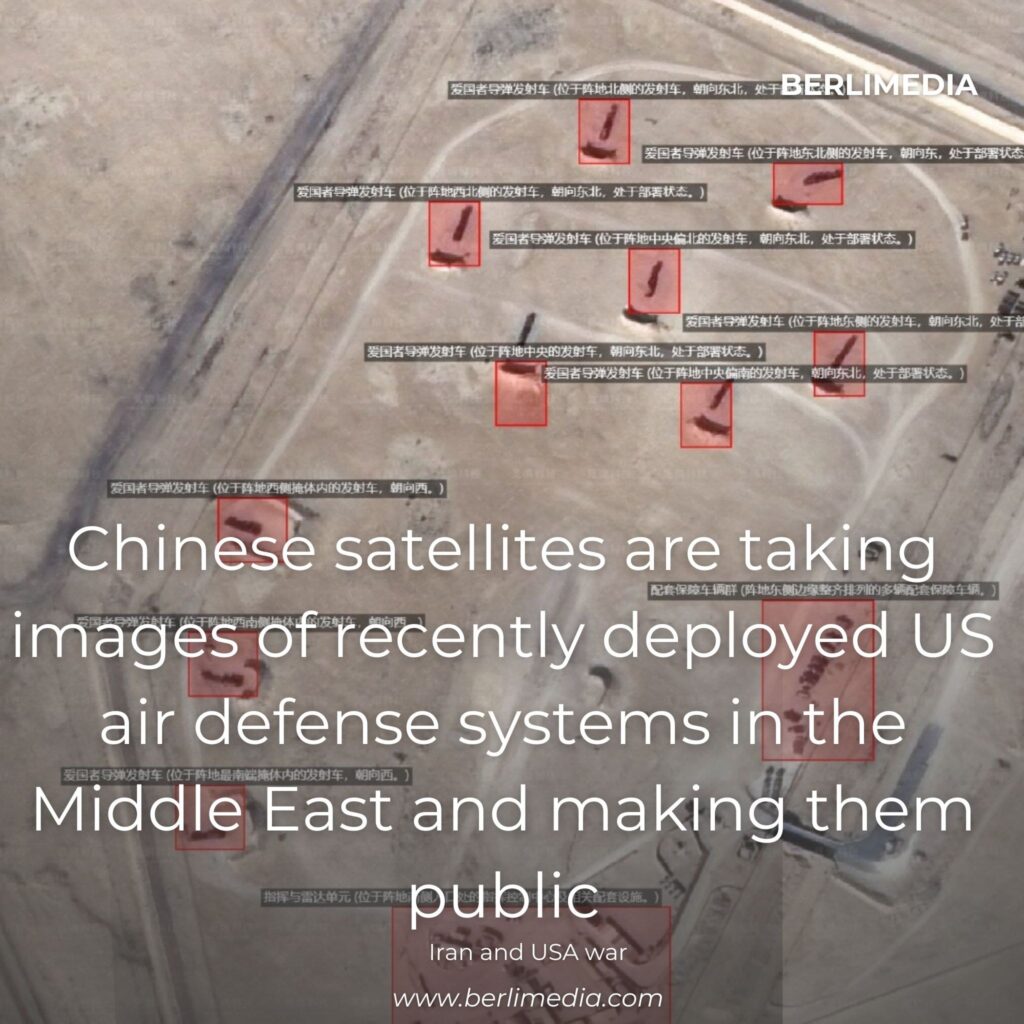
In a bold move that underscores growing geopolitical tensions, Chinese satellites are reportedly capturing high-resolution images of recently deployed U.S. air defense systems in the Middle East — and some of this imagery is being made public. Analysts say this represents a new level of transparency and intelligence-gathering in an already volatile region.
What’s Happening?
Satellite imagery from Chinese companies and government-backed satellites has shown the deployment locations of U.S. Patriot and THAAD missile defense batteries across strategic points in the Middle East. These images are not only detailed but also publicly accessible, raising concerns about security and operational secrecy.
Experts note that China’s move signals its increasing capabilities in space-based reconnaissance and its willingness to leverage these assets for geopolitical influence. Making the images public could be a way to showcase China’s technological reach while simultaneously sending a message to the U.S. and its allies.
Why It Matters
- Operational Security Risk: Publishing images of active U.S. defense systems could compromise mission readiness and provide potential adversaries with actionable intelligence.
- Geopolitical Messaging: By openly displaying these deployments, China demonstrates both its surveillance capabilities and its interest in the Middle East as a strategic theater.
- Technology and Space Competition: This incident highlights the rapidly advancing field of commercial and state-backed satellite reconnaissance, signaling a shift in how nations monitor each other.
The U.S. Response
U.S. defense officials have acknowledged awareness of the satellite imagery, but details on countermeasures remain limited. Analysts suggest this could accelerate camouflage, relocation, and cyber-defense strategies to protect sensitive military assets.
Conclusion
The release of satellite imagery of U.S. air defense deployments by Chinese satellites marks a new chapter in global intelligence operations. As space-based surveillance becomes more sophisticated and publicly accessible, nations may need to rethink how they deploy critical defense infrastructure and safeguard operational secrecy in contested regions.