Selank

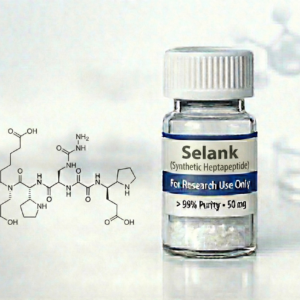
Selank is a synthetic neuropeptide studied for its potential role in anxiety modulation, neurotransmitter balance, and stress response. Preclinical and limited clinical research suggest effects on GABA, serotonin, and immune signaling, though regulatory approval outside Russia is lacking. Selank is available strictly for laboratory research purposes only.

Price range: $399.00 through $499.00

- +

Description

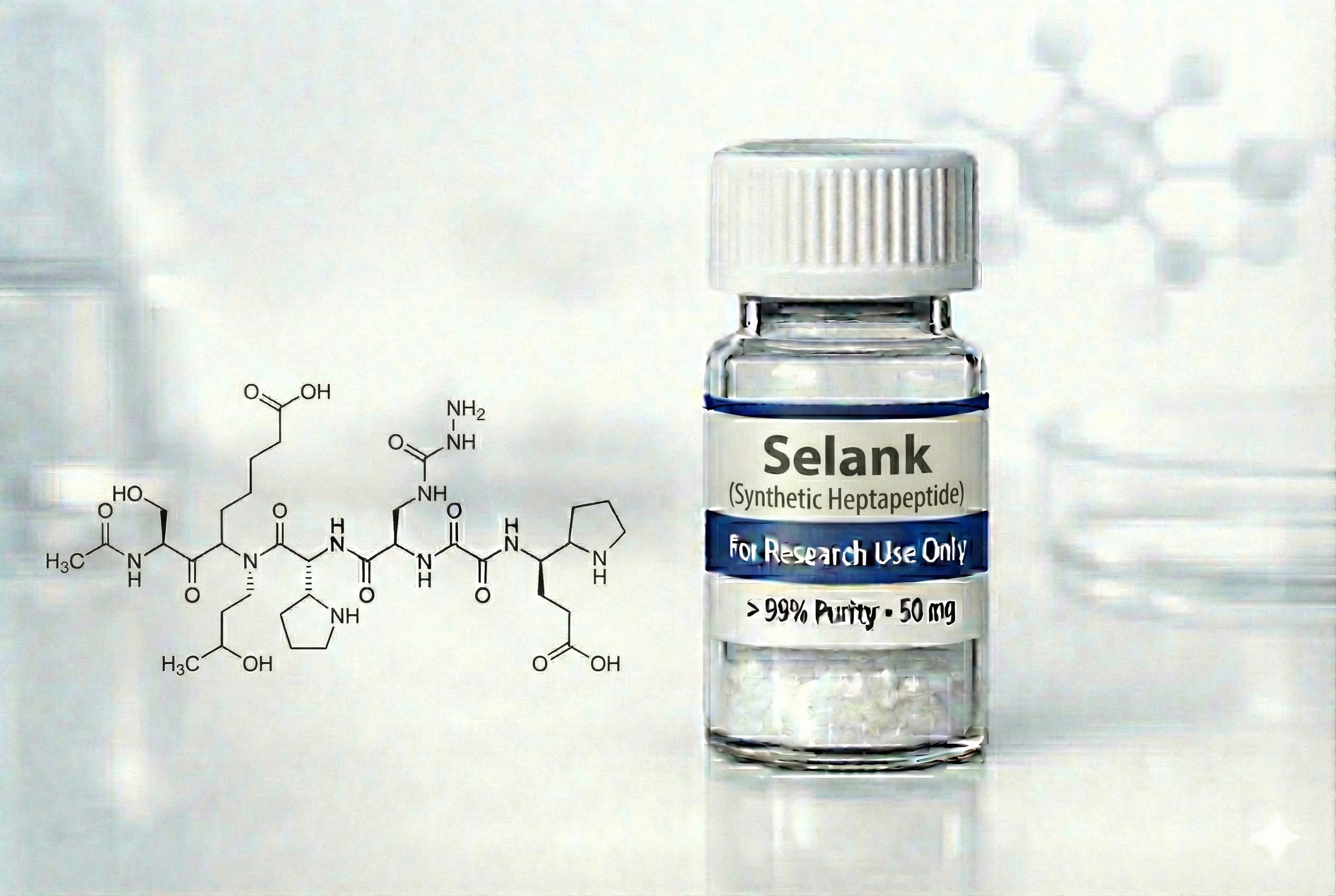
Selank is a synthetic heptapeptide consisting of seven amino acids: Threonine-Lysine-Proline-Arginine-Proline-Glycine-Proline (Thr-Lys-Pro-Arg-Pro-Gly-Pro).¹¹ The peptide was developed at the Institute of Molecular Genetics of the Russian Academy of Sciences in the 1990s as a synthetic analog of the endogenous immunomodulatory tetrapeptide tuftsin.⁷

Structural Design and Components:

Selank’s structure comprises two functional domains:¹²

Tuftsin fragment (Thr-Lys-Pro-Arg): The N-terminal portion derived from a natural immunoglobulin G heavy chain fragment with immunomodulatory properties discovered in the 1970s.¹³ Tuftsin itself is produced by enzymatic cleavage of IgG and demonstrates immunostimulatory effects on phagocytes and macrophages.

Pro-Gly-Pro (PGP) C-terminal extension: Also known as glyproline, this collagen-derived tripeptide was added to the C-terminus to increase resistance to proteolytic degradation and extend the peptide’s duration of action.¹⁴ Pro-Gly-Pro attachment to oligopeptides significantly increases the final molecule’s resistance to protease action, transforming tuftsin’s short half-life (measured in minutes) into a therapeutically viable compound with prolonged biological effects.¹⁵

This structural modification creates a peptide that retains tuftsin’s immunomodulatory properties while gaining anxiolytic and nootropic activities not present in the parent molecule.¹⁶

Molecular Characteristics:

Selank belongs to the class of short regulatory peptides with molecular weight approximately 750 Da.¹⁷ The peptide demonstrates unique potential to interact with receptors in both the central nervous system (CNS) and immune cells, bridging neurological and immunological pathways.¹⁸

Pharmacokinetics:

While comprehensive human pharmacokinetic studies are limited, animal research indicates Selank crosses the blood-brain barrier after intranasal administration.⁷ The PGP modification extends the peptide’s biological half-life compared to unmodified tuftsin, though exact human half-life values have not been published.¹⁴

Routes of Administration:

Intranasal: Most common and optimal route for CNS delivery; Selank crosses the blood-brain barrier after intranasal administration with effects observed within 30 minutes.¹⁹

Subcutaneous injection: Alternative parenteral route used in clinical studies and some formulations.²⁰

Intraperitoneal: Used in animal research studies.⁷

Regulatory Status:

Russia and CIS Countries: Selank is a registered pharmaceutical drug approved by the Russian Ministry of Health in 2009 for:²¹

  • Generalized anxiety disorder (GAD)
  • Neurasthenia
  • Anxiety-asthenic disorders
  • Adjustment disorders with anxiety
  • Stress-related conditions

Selank has been used clinically in Russia since the late 1990s under investigational protocols before formal approval.²²

United States: Selank is not FDA-approved as a drug or dietary supplement.¹⁰ The FDA designates Selank as a Category 2 bulk drug substance that “presents a risk due to concerns about high risk of immune reactions and impurities during the compounding process.”⁹ This Category 2 designation **prohibits compounding pharmacies from using Selank in any formulation.**²³

Current US Availability: Research-grade Selank is marketed with explicit disclaimers: “This product is intended for research purposes only and is not suitable for human consumption or use.”¹⁰ Despite FDA prohibition, some wellness clinics and online vendors market Selank for “research purposes” at prices ranging from $399-$499 per month.²⁰

European Union: Not approved by EMA; research compound only.

How It Works

Enkephalin Degradation Inhibition

Selank’s anxiolytic effects are partially mediated through potent inhibition of enkephalin-degrading enzymes—a mechanism discovered in 2001 that distinguishes it from conventional anxiolytics.⁵

Enzymatic Inhibition Potency:

A landmark study by Kozlovskaya et al. demonstrated Selank dose-dependently inhibits enzymatic hydrolysis of plasma enkephalin:²⁴

Compound

IC₅₀

Relative Potency

Selank

15-20 µM

Baseline

Bacitracin

>10 mM

>500× less potent

Puromycin

10 mM

500× less potent

Selank was more potent than established peptidase inhibitors bacitracin and puromycin in inhibiting enkephalinases.²⁵ This suggests “high efficiency of Selank in the therapy of anxiety and phobic disorders, including generalized anxiety, is due to its ability to inhibit enkephalin hydrolysis.”⁵

Structural Requirements:

Studies examining Selank fragments revealed:²⁶

  • Heptapeptide (full Selank): Maximum inhibitory effect
  • Pentapeptide fragments: Retained inhibitory effect
  • Tri-, tetra-, and hexapeptide fragments: No inhibitory effect

This indicates specific structural requirements for enkephalinase inhibition, with the pentapeptide representing the minimum active sequence.²⁶

Mechanism of Anxiolytic Action:

Enkephalins are endogenous opioid peptides that modulate pain, stress responses, and emotional states through interaction with δ-opioid receptors.⁵ Normally, enkephalins have extremely short half-lives (seconds to minutes) due to rapid enzymatic degradation by aminopeptidases and other peptidases.⁵ By inhibiting these degrading enzymes, Selank extends enkephalin signaling duration, enhancing their anxiolytic and stress-protective effects.²⁴

The enkephalin-opioid system interacts extensively with GABAergic neurotransmission: opioid receptor activation enhances GABA release in anxiety-related brain regions including the amygdala and prefrontal cortex.²⁷ This provides a mechanistic link between Selank’s enkephalinase inhibition and its GABAergic effects.²⁷

Broader Regulatory Peptide Effects:

“As the above enzymes take part in degradation of not only enkephalins but also other regulatory peptides, it can be assumed that one of the mechanisms of biological activity of Semax and Selank is related to this inhibitory activity of theirs.”²⁶ This suggests Selank may stabilize multiple neuropeptide systems beyond enkephalins.

GABA_A Receptor Allosteric Modulation

Selank enhances GABAergic neurotransmission through allosteric modulation of GABA_A receptors without direct binding to the benzodiazepine site.⁶

Mechanism:

Unlike benzodiazepines that directly activate the benzodiazepine binding site on GABA_A receptors, Selank appears to act as a positive allosteric modulator through alternative mechanisms.²⁸ This produces anxiolytic effects similar to benzodiazepines but with fundamentally different pharmacological profiles.⁷

Synergistic Effects with Benzodiazepines:

A 2017 study by Kasian et al. in rats demonstrated remarkable synergy between Selank and diazepam:⁷

Stress-induced anxiety model (platform test):

  • Diazepam 1 mg/kg alone: Partial reduction in anxiety
  • Selank 300 µg/kg alone: Moderate reduction in anxiety
  • Selank + Diazepam combination: Complete elimination of stress-induced anxiety

Non-stress anxiety elevation (open field test):

  • Selank monotherapy showed greatest efficacy against anxiety elevation unrelated to stress⁷
  • Combination therapy less advantageous in non-stress conditions

This suggests Selank’s anxiolytic mechanism involves both GABAergic and non-GABAergic pathways, with the balance shifting depending on whether anxiety is stress-related.⁷ The complete elimination of stress-induced anxiety with combination therapy while maintaining efficacy in non-stress contexts demonstrates Selank’s versatility across different anxiety phenotypes.⁷

Advantages Over Benzodiazepines:

Selank produces anxiolytic effects **without typical benzodiazepine side effects:**²⁹

  • No sedation or drowsiness
  • No muscle relaxation/weakness
  • No cognitive impairment
  • No addiction potential
  • No withdrawal syndrome upon discontinuation
  • No tolerance development with repeated use
  • Preserved or enhanced cognitive function (vs. impairment with benzodiazepines)

This safety profile makes Selank particularly attractive for long-term anxiety management and situations requiring maintained alertness.²⁹

Brain-Derived Neurotrophic Factor (BDNF) Upregulation

Selank rapidly enhances BDNF expression in the hippocampus—a mechanism contributing to both anxiolytic and cognitive-enhancing effects.³⁰

BDNF Gene Expression:

Studies demonstrate Selank increases BDNF mRNA and protein levels in hippocampal tissues.³⁰ The hippocampus plays critical roles in emotional regulation, stress response, and memory formation; BDNF is essential for neuroplasticity, neuronal survival, and synaptic function in this region.³⁰

Temporal Dynamics:

BDNF upregulation occurs relatively rapidly (within hours of administration), suggesting transcriptional activation rather than slower protein synthesis pathways.²⁸ This rapid onset aligns with Selank’s quick anxiolytic effects observed in both animal and human studies.²⁸

Functional Consequences:

Elevated BDNF levels promote:³¹

  • Enhanced synaptic plasticity underlying learning and memory
  • Improved neuronal survival under stress conditions
  • Neuroprotection against excitotoxicity and oxidative stress
  • Emotional resilience and stress adaptation
  • Neurogenesis in the hippocampal dentate gyrus

Clinical Correlation:

BDNF depletion is associated with anxiety disorders, depression, cognitive decline, and poor stress adaptation.³⁰ Selank’s ability to elevate BDNF may explain its dual benefits for both anxiety reduction and cognitive enhancement.³⁰

Monoamine Neurotransmitter Modulation

Selank significantly influences dopamine and serotonin metabolism in specific brain regions, contributing to its anxiolytic and nootropic effects.³²

Serotonin System Effects:

Research by Inozemtseva et al. demonstrated region-specific effects on serotonin metabolism:³²

Brainstem: Selank increased serotonin metabolite levels, indicating enhanced serotonergic activity in this anxiety-regulatory region.³²

Hypothalamus: Modulation of serotonin turnover, affecting stress hormone regulation.³²

Enhanced serotonergic function in these regions contributes to anxiolytic effects, as serotonin plays critical roles in mood regulation and anxiety modulation.³⁰ This mechanism complements Selank’s GABAergic effects, providing multi-neurotransmitter anxiety reduction.³⁰

Dopamine System Effects:

Selank demonstrated stress-protective effects on dopamine metabolism:³²

Under stress conditions: Selank normalized dopamine levels that would otherwise be dysregulated.³²

Baseline conditions: Minimal effects on dopamine in non-stressed animals, suggesting adaptive rather than direct dopaminergic action.³²

This stress-dependent dopamine modulation may contribute to Selank’s cognitive benefits under pressure and its lack of stimulant side effects under normal conditions.³⁰

Norepinephrine Effects:

Some studies suggest Selank influences noradrenergic activity in stress-responsive brain regions, though this mechanism is less characterized than serotonergic and dopaminergic effects.³⁰

Immunomodulatory Effects

Selank exhibits significant immunomodulatory properties through modulation of cytokine production—effects inherited from its parent peptide tuftsin and enhanced by the PGP modification.³³

Cytokine Modulation:

Studies in patients with anxiety-asthenic disorders and immune dysregulation demonstrated Selank’s effects on multiple cytokines:³⁴

Pro-inflammatory cytokines (under inflammatory conditions):

  • IL-1β: Reduced
  • TNF-α: Reduced
  • IL-17: Modulated toward normal levels

Anti-inflammatory and regulatory cytokines:

  • IL-6: Enhanced production³⁴
  • Interferon-gamma (IFN-γ): Increased in certain contexts³⁴
  • IL-10: Modulated

IL-4: Studies show variable effects depending on baseline immune state.

Context-Dependent Effects:

A 2020 study examining Selank’s effects under conditions modeling inflammatory pathology found its cytokine-modulating effects were **adaptive rather than uniformly stimulatory or suppressive.**³⁵ Selank tended to normalize dysregulated cytokine profiles rather than simply increase or decrease all immune mediators.³⁵

Clinical Significance:

The brain-immune axis plays important roles in anxiety pathophysiology: chronic stress and anxiety disorders are associated with pro-inflammatory cytokine elevation, while immune dysregulation can exacerbate anxiety symptoms.³⁴ Selank’s ability to modulate this axis may contribute to its therapeutic effects beyond direct CNS mechanisms.³⁴

Tuftsin Heritage:

These immunomodulatory properties reflect Selank’s structural origin from tuftsin, which stimulates phagocyte activity and enhances immune responses.¹¹ The addition of Pro-Gly-Pro appears to have refined these effects while adding CNS activity not present in the parent peptide.¹

Gene Expression Modulation

Selank influences expression of multiple genes involved in neurotransmitter systems, neurotrophic factors, and stress responses.³⁰

Documented Gene Expression Changes:

  • Upregulation of BDNF gene expression (discussed above)
  • Modulation of genes encoding monoamine receptors and transporters
  • Effects on genes regulating synaptic plasticity
  • Influence on stress-response gene networks

The full scope of Selank’s transcriptional effects has not been comprehensively mapped using genome-wide approaches (unlike its related peptide Semax, which has undergone extensive transcriptomic analysis).

Research Evidence

Human Clinical Trials—Generalized Anxiety Disorder

Study 1: GAD vs. Benzodiazepine Comparison (N=30)

**Zozulya AA, et al. Efficacy and possible mechanisms of action of a new peptide anxiolytic selank in therapy of generalized anxiety disorder and neurasthenia. Zh Nevrol Psikhiatr Im S S Korsakova. 2008;108(4):38-48.**³

Design: Clinical trial comparing Selank to the benzodiazepine medazepam in patients with generalized anxiety disorder.

Study Population: 30 patients with GAD diagnosis.

Treatment: Selank administered intranasally (specific dose and duration not fully detailed in English abstract).

Comparison Drug: Medazepam (benzodiazepine anxiolytic).

*Results:*³

  • Selank showed effects comparable to medazepam in reducing anxiety symptoms
  • Additional psychostimulant benefits not observed with benzodiazepine (improved alertness, reduced fatigue)
  • Significantly reduced neurasthenia symptoms beyond anxiety reduction
  • No sedation or cognitive impairment reported with Selank
  • Well tolerated with minimal adverse effects

Significance: First clinical demonstration that Selank provides anxiolytic efficacy matching benzodiazepines while offering cognitive benefits rather than impairment; established Selank’s favorable side effect profile in GAD patients.

Study 2: Selank-Benzodiazepine Combination (N=70)

**Medvedev VE, et al. Selank and short peptides in combination therapy of anxiety-phobic disorders. Russian study, 2015.**⁴

Design: Study examining Selank combined with the benzodiazepine phenazepam versus benzodiazepine monotherapy.

Study Population: 70 patients with anxiety disorders.

Treatment Groups:

  • Phenazepam (benzodiazepine) alone
  • Selank + phenazepam combination

*Results:*⁴

  • Combination therapy provided better efficacy than benzodiazepine monotherapy
  • Fewer side effects in combination group compared to benzodiazepine alone
  • Allowed for lower benzodiazepine doses while maintaining or improving therapeutic benefit
  • Improved tolerability profile

Significance: Demonstrated Selank’s utility as adjunctive therapy allowing benzodiazepine dose reduction while enhancing efficacy—a strategy for minimizing benzodiazepine-related risks (dependence, sedation, cognitive impairment).

Study 3: Immunomodulatory Effects in Anxiety Patients

**Uchakina ON, et al. Immunomodulatory effects of selank in patients with anxiety-asthenic disorders. Zh Nevrol Psikhiatr Im S S Korsakova. 2008;108(5):71-5.**³⁴

Design: Study examining immune system effects of Selank treatment in anxiety patients.

Study Population: Patients with anxiety-asthenic disorders and evidence of immune dysregulation.

*Results:*³⁴

  • Selank normalized cytokine production profiles
  • Enhanced IL-6 and interferon-gamma production
  • Modulated pro-inflammatory cytokine levels
  • Improvements in immune parameters correlated with anxiety symptom reduction

Significance: First demonstration of Selank’s immunomodulatory effects in human anxiety patients; suggests brain-immune axis modulation contributes to therapeutic effects.

Animal Studies—Anxiety Models

Study 1: Benzodiazepine Synergy (Kasian et al., 2017)

**Kasian A, Moskaleva PV, Yamidanov RS, et al. Peptide Selank Enhances the Effect of Diazepam in Reducing Anxiety in Unpredictable Chronic Mild Stress Conditions in Rats. Bull Exp Biol Med. 2017;162(4):501-504.**⁷

Design: Study examining Selank alone, diazepam alone, and combination therapy in rats subjected to unpredictable chronic mild stress (UCMS).

Treatment Groups:

  • Control (no stress, no treatment)
  • UCMS + saline
  • UCMS + Selank (300 µg/kg, intraperitoneally)
  • UCMS + Diazepam (1 mg/kg)
  • UCMS + Selank + Diazepam combination

Anxiety Assessment: Multiple behavioral tests including platform test (stress-related anxiety) and open field test (non-stress anxiety).

*Results:*⁷

Platform Test (Stress-Related Anxiety):

  • Control rats showed minimal anxiety
  • UCMS + saline: Significant anxiety elevation
  • Diazepam alone: Partial anxiety reduction
  • Selank alone: Moderate anxiety reduction
  • Combination: Complete elimination of stress-induced anxiety (returned to control levels)

Open Field Test (Non-Stress Anxiety):

  • Selank monotherapy most effective for anxiety not specifically stress-related
  • Combination therapy showed benefit but less pronounced than in stress conditions

Behavioral Observations:

  • Selank preserved normal exploratory behavior
  • Diazepam caused sedation and reduced activity
  • Combination maintained activity levels closer to normal

Significance: First demonstration that Selank and benzodiazepines have complementary mechanisms: Selank most effective against stress-independent anxiety, benzodiazepines against stress-related anxiety, and combination completely eliminates both types. Study provides mechanistic insight into optimal clinical use (monotherapy vs. combination based on anxiety subtype).⁷

Study 2: Monoamine System Effects (Inozemtseva et al., 2008)

**Inozemtseva LS, Karpenko MN, Dolotov OV, et al. Effects of heptapeptide selank on the content of monoamines and their metabolites in the brain of BALB/C mice. Neurochem J. 2008;2:124-127.**³²

Design: Neurochemical study examining Selank’s effects on dopamine, serotonin, and their metabolites in different brain regions.

Study Population: BALB/C mice treated with Selank.

Assessment: HPLC measurement of monoamine neurotransmitters and metabolites in brain regions.

*Results:*³²

  • Brainstem: Increased serotonin metabolite levels (enhanced serotonergic activity)
  • Hypothalamus: Modulated serotonin turnover
  • Dopamine effects: Stress-protective normalization of dopamine levels
  • Regional specificity: Effects concentrated in anxiety- and stress-regulatory brain areas

Significance: Demonstrated Selank’s multi-neurotransmitter mechanism beyond GABAergic effects; established monoamine modulation as contributing mechanism to anxiolytic and nootropic properties.

Animal Studies—Enkephalin System

Study: Enkephalinase Inhibition (Kozlovskaya et al., 2001)

**Kozlovskaya MM, Val’dman EA, Seredenin SB. The inhibitory effect of Selank on enkephalin-degrading enzymes as a possible mechanism of its anxiolytic action. Neurosci Behav Physiol. 2001;31(4):399-401.**⁵

Design: Biochemical study examining Selank’s effects on enkephalin-degrading enzyme activity.

Methods:

  • Enzymatic assays using plasma and brain tissue preparations
  • Comparison to established peptidase inhibitors bacitracin and puromycin
  • Structure-activity relationship studies using Selank fragments

*Results:*⁵·²⁴·²⁶

  • Selank IC₅₀: 15-20 µM (most potent)
  • Bacitracin IC₅₀: >10 mM (>500× less potent)
  • Puromycin IC₅₀: 10 mM (500× less potent)
  • Heptapeptide and pentapeptide fragments active; shorter fragments inactive
  • Dose-dependent inhibition of enkephalin hydrolysis

Significance: Identified enkephalinase inhibition as a novel anxiolytic mechanism distinct from benzodiazepines and SSRIs; explained Selank’s unique pharmacological profile; suggested therapeutic potential for conditions involving dysregulated opioid peptide systems.

Current Status

FDA Prohibition and Safety Concerns

Category 2 Designation:

The FDA includes Selank in its list of Category 2 bulk drug substances that present **”a risk due to concerns about high risk of immune reactions and impurities during the compounding process.”**⁹ This designation means **compounding pharmacies are prohibited from using Selank in any formulation.**²³

Selank appears alongside peptides like BPC-157, Epitalon, and thymosin beta-4 on the FDA’s prohibited list.⁹ The FDA’s primary concerns are immunogenicity (immune system reactions to the peptide) and quality control issues with non-pharmaceutical-grade products.¹⁰

No Pharmaceutical-Grade Product:

“Currently, Selank is not FDA-approved and is only available through compounding pharmacies or as research peptides. The FDA has not evaluated Selank for safety or efficacy.”¹⁰ As of the 2024 FDA guidance, compounding pharmacies can no longer legally compound Selank.²³

Current Market Reality:

Despite FDA prohibition, research-grade Selank remains available through online vendors and some wellness clinics with explicit disclaimers: “This product is intended for research purposes only and is not suitable for human consumption or use.”¹⁰ Prices range from $399-$499 per month for intranasal or injectable formulations.²⁰

Quality and Safety Risks:

Research-grade peptides lack pharmaceutical manufacturing standards, potentially containing:¹⁰

  • Variable peptide content (actual vs. labeled concentration)
  • Synthesis byproducts or incomplete sequences
  • Bacterial endotoxins (compromised sterility)
  • Unknown contaminants or aggregated peptides
  • Incorrect salt forms or degraded product

These quality concerns increase immunogenicity risk and unpredictable effects.¹⁰

Evidence Base Assessment

Strengths:

Russian clinical experience:

  • Approved pharmaceutical in Russia since 2009⁴·²²
  • Multiple clinical trials in anxiety disorder populations
  • Consistent findings across studies (anxiolytic efficacy, favorable safety)
  • Long-term clinical use (15+ years in Russia) with good safety record
  • Comparison studies to established benzodiazepines

Strong mechanistic understanding:

  • Multiple validated mechanisms (enkephalinase inhibition, GABA modulation, BDNF upregulation, monoamine effects)
  • Quantitative IC₅₀ data for enkephalinase inhibition
  • Well-characterized synergy with benzodiazepines
  • Brain region-specific effects documented

Favorable safety profile:

  • No sedation, addiction, or withdrawal in clinical use
  • No cognitive impairment (actually enhances cognition)
  • Minimal adverse effects reported
  • Safe combination with benzodiazepines

Limitations:

Geographic concentration:

  • Vast majority of clinical data from Russian sources
  • Limited replication in Western populations
  • Some studies published only in Russian journals
  • Methodological details not always fully available in English literature

Study design concerns:

  • Some older studies may not meet current Phase III trial standards
  • Sample sizes relatively small (N=30-70 in published trials)
  • Lack of large-scale double-blind placebo-controlled trials meeting FDA approval standards
  • Long-term safety data (>1 year) limited

Western validation gap:

  • No FDA-sponsored clinical trials
  • Minimal published research from US/European institutions
  • No systematic pharmacokinetic studies in Western populations
  • Immunogenicity not formally assessed using modern methods

Clinical Applications

**Established Indications (Russia):**²¹·²²

Generalized anxiety disorder (GAD): Primary indication; comparable efficacy to benzodiazepines
Neurasthenia: Anxiety with fatigue, irritability, cognitive symptoms
Anxiety-asthenic disorders: Mixed anxiety-fatigue presentations
Adjustment disorders with anxiety: Stress-related anxiety
PTSD support: Emerging application for post-traumatic stress²²

Investigational Applications:

Cognitive enhancement (nootropic): Memory, focus, learning capacity²⁹
Benzodiazepine augmentation: Allows dose reduction while maintaining efficacy⁴
Benzodiazepine withdrawal support: May ease discontinuation (theoretical)²²
Immune dysregulation in psychiatric disorders: Brain-immune axis modulation³⁴
ADHD: Potential attention benefits without stimulant side effects³⁰
Depression (adjunctive): BDNF elevation suggests antidepressant potential³¹

Dosing (From Russian Clinical Practice)

**Intranasal Administration:**¹⁹·²⁰

  • Typical dose: 2-3 drops per nostril, 2-3 times daily
  • Concentration: Usually 0.15% solution (1.5 mg/mL)
  • Daily total: Approximately 3000-9000 µg (3-9 mg)
  • Treatment duration: 14-30 days for acute treatment; longer for chronic conditions

**Subcutaneous Administration:**²⁰

  • Dose range: 300-600 µg per injection
  • Frequency: Once or twice daily
  • Duration: Similar to intranasal protocols

**Onset of Action:**²⁰

  • Anxiolytic effects: 15-30 minutes after administration
  • Peak effects: 1-2 hours
  • Duration: 4-6 hours (may vary by individual)

**Treatment Courses:**²²

  • Initial course: 2-4 weeks
  • Maintenance: May be used intermittently or continuously
  • No tolerance development reported, allowing long-term use without dose escalation

Safety Profile

Clinical Safety Data:

**Russian clinical experience (15+ years):**⁴·²²·²⁹

  • Well-tolerated at therapeutic doses
  • No serious adverse events reported in published trials
  • No addiction, dependence, or withdrawal syndrome
  • Safe in combination with benzodiazepines and other psychiatric medications

Adverse Effects:

The most commonly reported side effects are minimal:¹⁰·²²

  • Mild nasal irritation (intranasal route)
  • Occasional headache
  • Transient dizziness (rare)
  • Injection site reactions (subcutaneous route)

“Selank is considered to have minimal side effects compared to traditional anxiolytics.”²²

Contraindications and Precautions:

Theoretical concerns:

  • Pregnancy and lactation: No safety data; avoid use
  • Children: Safety and efficacy not established
  • Immunocompromised individuals: Immunomodulatory effects require caution
  • Active malignancy: Immune effects not fully characterized in cancer patients

Drug Interactions:

Selank demonstrates positive synergy with benzodiazepines without dangerous interactions.⁷·⁴ Interactions with other medication classes have not been systematically studied.

Comparison to Other Anxiolytics

  1. Benzodiazepines:
  • Benzodiazepines: Rapid onset, highly effective, but cause sedation, cognitive impairment, addiction, tolerance
  • Selank: Comparable anxiolytic efficacy, no sedation/addiction, enhances cognition, but not FDA-approved
  1. SSRIs/SNRIs:
  • SSRIs/SNRIs: FDA-approved first-line GAD treatment, 4-6 weeks onset, sexual side effects, GI issues
  • Selank: Rapid onset (minutes-hours), minimal side effects, but lacks Western approval
  1. Buspirone:
  • Buspirone: FDA-approved anxiolytic, non-addictive, 2-4 weeks onset, modest efficacy
  • Selank: Faster onset, potentially superior efficacy, but not approved in US
  1. Pregabalin:
  • Pregabalin: FDA-approved for GAD, rapid onset, but sedation and weight gain common
  • Selank: Similar rapid onset, no sedation/weight gain, but regulatory limitations
  1. Hydroxyzine:
  • Hydroxyzine: FDA-approved antihistamine for anxiety, rapid onset, causes sedation
  • Selank: Similar speed, no sedation, cognitive enhancement vs. impairment

Research Gaps and Future Directions

Critical Studies Needed:

Phase III RCTs in Western populations:

  • Large-scale double-blind placebo-controlled trials
  • GAD and other anxiety disorder endpoints meeting FDA approval standards
  • Comparison to first-line anxiolytics (SSRIs, SNRIs, benzodiazepines)
  • Long-term follow-up (6-12 months)
  • Systematic adverse event reporting

Cognitive enhancement trials:

  • Healthy population studies with objective cognitive testing
  • Dose-response curves for nootropic effects
  • Long-term safety of chronic use in cognitively normal individuals
  • Comparison to established nootropics

Mechanism studies:

  • Human gene expression studies
  • Time-course of BDNF elevation in humans
  • PET imaging studies of receptor occupancy
  • Biomarkers predicting response

Safety characterization:

  • Systematic pharmacokinetics and pharmacodynamics in Western populations
  • Formal immunogenicity assessment using modern methods
  • Drug-drug interaction studies (SSRIs, SNRIs, benzodiazepines, stimulants)
  • Effects in special populations (elderly, pregnant, pediatric)
  • Long-term safety (>1 year continuous use)

Optimal delivery:

  • Intranasal vs. subcutaneous comparative effectiveness
  • Bioavailability optimization
  • Modified formulations for extended duration
  • Oral bioavailability investigation

Combination therapy protocols:

  • Optimal Selank + benzodiazepine dosing ratios
  • Selank for benzodiazepine tapering protocols
  • Combination with SSRIs or other first-line agents

Comparison to Related Peptide Semax

Selank and Semax are both Russian synthetic peptides with Pro-Gly-Pro modifications, but serve different primary functions:³⁶

Feature

Selank

Semax

Primary indication

Anxiety disorders

Stroke, cognitive disorders

Parent peptide

Tuftsin (immunological)

ACTH 4-10 (neuroendocrine)

Primary mechanism

Enkephalinase inhibition, GABA modulation

Neurotrophin activation, gene modulation

CNS effects

Anxiolytic, nootropic

Neuroprotective, nootropic

Immune effects

Significant immunomodulation

Minimal immune focus

Side effects

Minimal

Minimal

Russian approval

2009 (GAD)

1990s (stroke)

FDA status

Category 2 prohibited

Not approved, research only

Both peptides share the Pro-Gly-Pro stabilizing modification and demonstrate cognitive-enhancing properties alongside their primary therapeutic effects.³⁶ Semax has more extensive gene expression data (1500+ genes modulated), while Selank has more human anxiety disorder trial data.³⁶

Disclaimer

This content is for educational and research purposes only.

Selank is not FDA-approved in the United States and is designated as a Category 2 bulk drug substance with “high risk of immune reactions and impurities,” prohibiting compounded use.

All available Selank is research-grade labeled “not suitable for human consumption.”

While extensively used clinically in Russia for over 15 years with reported excellent safety and efficacy comparable to benzodiazepines without addiction or sedation, Selank has not undergone FDA-required Phase III clinical trials.

The majority of human clinical evidence originates from Russian sources with limited Western replication.

Multiple validated mechanisms include enkephalinase inhibition (500× more potent than bacitracin/puromycin), GABA_A receptor modulation, BDNF upregulation, monoamine normalization, and immunomodulation.

Potential users should be aware Western regulatory agencies have not evaluated Selank for safety or efficacy.

This peptide should be considered investigational outside Russia, with use carrying unknown risks in populations not studied in published trials.

Reviews

There are no reviews yet.

Be the first to review “Selank”

Your email address will not be published. Required fields are marked *

Latest News

Latest Research Updates

Curated news and publications on peptides, metabolic research, and cellular energy modulation.
SelankSelank
Price range: $399.00 through $499.00Select options