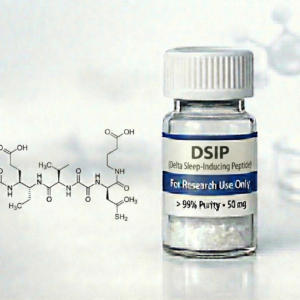
DSIP (Delta Sleep-Inducing Peptide)

DSIP (Delta Sleep-Inducing Peptide) is a naturally occurring neuropeptide studied for its role in sleep regulation, neurotransmitter balance, and stress response. Current evidence remains limited, and DSIP is available strictly for laboratory research purposes only.

$44.00

- +

Description

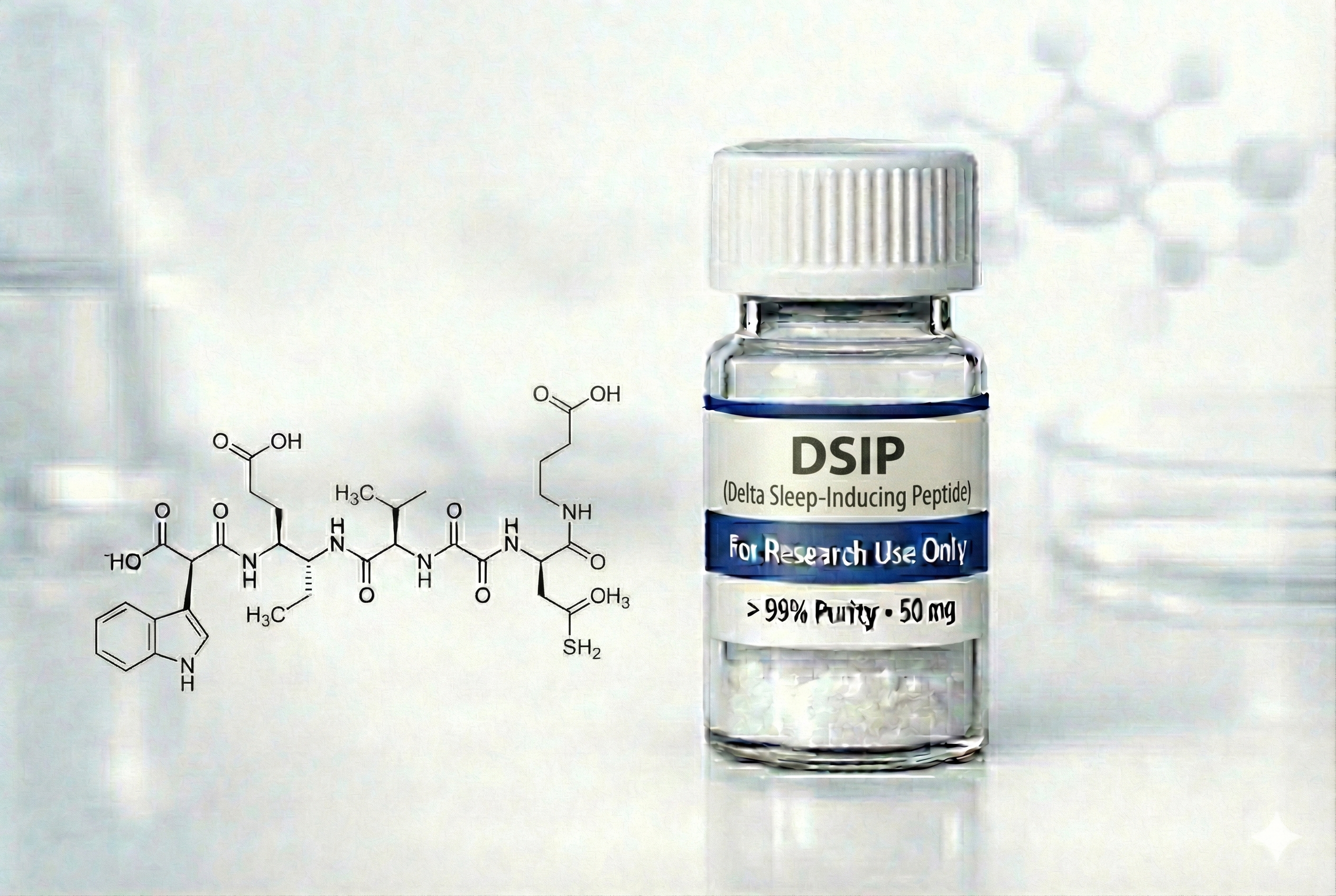
Delta sleep-inducing peptide (DSIP), also known as emideltide, is a naturally occurring nonapeptide consisting of nine amino acids: Tryptophan-Alanine-Glycine-Glycine-Aspartic acid-Alanine-Serine-Glycine-Glutamic acid (Trp-Ala-Gly-Gly-Asp-Ala-Ser-Gly-Glu). The peptide was originally isolated in 1977 from the cerebral venous blood of rabbits during sleep research and has since been found to be present in small amounts in human brains and plasma, with higher concentrations later in the day.

Natural Occurrence:

DSIP is produced endogenously in the hypothalamus, where many neuroendocrine substances originate. The peptide has been detected in:

  • Human brain tissue (small amounts)
  • Human plasma (with circadian variation—higher concentrations later in day)
  • Human breast milk (higher concentrations than plasma)

The presence of DSIP in breast milk at higher concentrations has led researchers to hypothesize it may facilitate post-feeding sleep tendencies among newborns, though it remains unclear whether DSIP truly has a hand in neonate sleep-wake cycles.

Structural Characteristics:

DSIP is characterized by its small, nonapeptide sequence with relatively simple structure. This simplicity belies its hypothesized biological versatility: the peptide’s short structure is thought to enable it to maintain flexibility while retaining enough specificity to engage with proteins and cellular receptors. Research indicates the peptide may adopt conformations allowing it to interact transiently with signaling complexes, making it a candidate for investigating short-lived molecular events.

Unique Pharmacological Properties:

DSIP possesses two highly unusual properties for a peptide:

  • Blood-brain barrier penetration: DSIP can cross the blood-brain barrier, allowing direct CNS effects
  • Gut absorption: DSIP is easily absorbed via the gut, uncommon for peptides which typically undergo rapid enzymatic degradation

These properties distinguish DSIP from most peptide therapeutics and may explain its diverse physiological effects.

Routes of Administration:

Intravenous: Most common route in clinical trials; provides rapid onset of effects
Intraperitoneal: Used in animal research studies
Oral: Theoretically possible given gut absorption capability, though clinical data limited
Intranasal: Potential route given blood-brain barrier penetration, though not extensively studied

Regulatory Status:

Historical Use: DSIP has been studied for decades since its discovery in 1977, with human clinical trials conducted primarily in the 1980s. Early researchers described DSIP as “incredibly safe” based on the absence of lethal doses in animal studies and minimal adverse effects in human trials.

United States—Current Status: DSIP is not FDA-approved as a drug or dietary supplement. The FDA includes DSIP on its Category 2 bulk drug substances list, designating it as presenting “significant safety risks.”

FDA Safety Concerns:

  • Primary concern: Risk of immunogenicity—potential life-threatening immune responses
  • Safety data gap: “No safety-related information regarding DSIP has been identified, so it’s unknown whether it could be harmful to humans”
  • Compounding prohibition: Category 2 designation prohibits compounding pharmacies from using DSIP

Current US Availability: Practically all commercially available DSIP is research-grade material “suitable for laboratory use only” due to relatively low purity levels. Online vendors market DSIP at prices ranging from $44 (5mg) to $895 (bulk quantities) with explicit “not for human consumption” disclaimers.

International Status: DSIP has never advanced into full pharmaceutical approval in any major regulatory jurisdiction (US, EU, Japan). It remains an investigational compound despite decades of research.

The Safety Paradox:

A distinct contradiction exists between historical safety data and current regulatory classification:

Historical View: Early researchers described DSIP as “incredibly safe”—animal studies failed to identify a lethal dose (LD50), and human trials reported no significant adverse events other than transient headaches or nausea.

Modern Regulatory View: The FDA places DSIP on Category 2 with “significant safety risks,” primarily concerning immunogenicity.

The Immunogenicity Argument:

The FDA’s primary objection is that peptide drugs can be recognized by the immune system as foreign antigens, potentially leading to production of Anti-Drug Antibodies (ADAs). If the body creates antibodies against exogenous DSIP, these antibodies might theoretically cross-react with endogenous DSIP or similar proteins, potentially causing deficiency syndrome or autoimmunity. However, no such cases have been documented in the published literature despite decades of research use.

How It Works

Neurotransmitter Modulation

DSIP significantly influences multiple neurotransmitter systems involved in sleep regulation, mood, and stress responses.⁷·⁸

Serotonin (5-HT) Effects:

A 2024 study in PCPA-induced insomnia mice demonstrated DSIP treatment significantly restored serum serotonin levels that were depleted in the insomnia model.⁸ Serotonin plays critical roles in:⁸·²¹

  • Sleep-wake cycle regulation
  • Mood stability
  • Anxiety modulation
  • Circadian rhythm maintenance

DSIP’s ability to normalize serotonin levels in insomnia states may partially explain its sleep-promoting and mood-regulating effects.⁸

Dopamine Effects:

DSIP treatment in insomnia models significantly increased dopamine levels, a neurotransmitter associated with pleasure, wakefulness, alertness, and reward processing.⁸ This finding appears paradoxical for a “sleep-inducing” peptide, but dopamine normalization likely reflects restoration of healthy circadian rhythm rather than direct sedation.⁸

The model group (insomnia-induced) showed significantly lower dopamine levels, which could be associated with neuronal stress or damage.⁸ DSIP’s ability to restore dopamine suggests neuroprotective or restorative effects beyond simple sleep induction.⁸

Glutamate Effects:

Glutamate, the primary excitatory neurotransmitter involved in cognition, memory, and learning, was normalized by DSIP treatment in insomnia models.⁸ The insomnia model showed reduced glutamate levels, suggesting impaired brain function; DSIP treatment helped restore normal levels.⁸

Melatonin Effects:

DSIP treatment increased melatonin levels in insomnia models, indicating potential stress-mitigating effects and restoration of circadian rhythm.⁸ Melatonin is the master regulator of sleep-wake cycles, and DSIP’s ability to enhance melatonin production may contribute significantly to its sleep-promoting properties.⁸

Blood-Brain Barrier-Crossing Enhancement:

A 2024 study demonstrated that fusing DSIP with crossing blood-brain barrier peptides (CBBBP—sequence GGGGYGRKKRRQRRR) significantly enhanced DSIP’s therapeutic efficacy.⁸ DSIP-CBBBP showed superior restoration of neurotransmitter balance compared to DSIP alone, suggesting that optimizing CNS delivery amplifies DSIP’s neuromodulatory effects.⁸

Endocrine System Effects

DSIP’s mechanism of action may involve endocrine regulation, though this remains incompletely understood.²·²²

Somatoliberin (Growth Hormone-Releasing Hormone) Stimulation:

Some research suggests, though not conclusively, that DSIP can stimulate somatoliberin secretion.²·²² Somatoliberin contributes to slow-wave sleep—an indicator of healthy slumber and restorative sleep quality.²·²³·²⁴

Slow-Wave Sleep Enhancement:

Both sleep length and quality are influenced by endocrine factors, particularly growth hormone-releasing hormone.²·²² The connection between DSIP, somatoliberin, and slow-wave sleep may explain DSIP’s ability to improve not just sleep quantity but sleep quality as measured by EEG parameters.³·⁴

Circadian Rhythm Effects:

DSIP demonstrates pronounced influence on circadian rhythms of locomotion, neurotransmitter levels, plasma protein concentrations, and cortisol secretion.⁶·⁷ This circadian modulation may contribute to DSIP’s therapeutic effects beyond simple sleep induction.⁶

Opiate Receptor Interaction

DSIP possesses agonistic activity on opiate receptors, which appears central to several of its therapeutic applications.⁵·⁷·²⁵

Withdrawal Syndrome Treatment:

Research has postulated that DSIP’s agonistic activity on opiate receptors makes it valuable for treating withdrawal syndromes.⁵·²⁵ In clinical trials, DSIP administration to patients experiencing alcohol or opiate withdrawal resulted in:⁵·²⁵

  • Immediate onset of action
  • Good and lasting suspension of somatic symptoms and signs
  • Slower resolution of anxiety (within hours)
  • Effects reversed by Naloxone (confirming opiate receptor involvement)⁵

The Naloxone-reversibility of DSIP’s effects confirms that its actions on withdrawal symptoms involve opiate receptor mechanisms.⁵·²⁵

Pain Modulation:

DSIP’s interaction with endogenous opioid-peptidergic systems contributes to its analgesic effects observed in chronic pain conditions.⁶·⁷ The peptide shows a modulation or “programming” interaction with opioid systems, rather than simple agonism or antagonism.⁶

Tolerance and Dependence Prevention:

Interestingly, while DSIP acts on opiate receptors, it can also act antagonistically to significantly inhibit the development of opioid and alcohol dependence.²⁵ This dual capability—alleviating withdrawal while preventing dependence—distinguishes DSIP from conventional opioid medications.²⁵

Stress Response Modulation

DSIP demonstrates pronounced effects on stress physiology and stress-related behaviors.⁷·²⁶

Substance P Modulation:

A 1992 study in rats found intraperitoneal DSIP injection increased the concentration of substance P—a neurotransmitter positively correlated with regulation of anxiety and mood—in the hypothalamus.²⁶·²⁷ Researchers concluded DSIP “sharply decreases the classical manifestations of stress.”²⁶

Stress-Induced Cortisol Effects:

DSIP showed pronounced influence on plasma cortisol concentrations and circadian cortisol rhythms.⁶·⁷ This may explain DSIP’s effects on stress tolerance and anxiety reduction observed in human trials.²⁸

Experimental Stress Counteraction:

DSIP was shown to counteract experimentally induced stress situations in animals.⁶·⁷ This stress-protective effect extends beyond sleep improvement to general resilience against psychological stress.²⁸

Mood and Depression Effects

DSIP demonstrates antidepressant-like effects through multiple mechanisms.⁶·⁸

Behavioral Measures:

The 2024 DSIP-CBBBP study demonstrated significant improvements in depression-related behavioral measures:⁸

  • Tail suspension test: DSIP significantly reduced immobility time (indicator of learned helplessness/depression)
  • Sucrose preference test: DSIP increased sucrose preference (measure of anhedonia reduction)
  • Depressive state reduction: Clinical trial in chronic pain patients found simultaneous significant reduction in depressive states alongside pain relief⁶

Psychomotor Performance:

Human studies reported improvement of psychomotor performance and concentration capacity alongside sleep normalization.⁶·⁷ This cognitive enhancement distinguishes DSIP from sedative sleep aids that typically impair daytime function.

Sleep-Depression Link:

DSIP’s antidepressant effects may be partially consequent to sleep improvements, as sleep restoration is therapeutic for depression.²⁹ However, DSIP’s direct effects on neurotransmitters (serotonin, dopamine) and stress systems suggest mechanisms beyond sleep improvement alone.⁸

Additional Mechanisms

MAO-A Activity Induction:

DSIP induces cerebral MAO-A (monoamine oxidase A) activity, affecting metabolism of monoamine neurotransmitters.⁶·⁷ This may contribute to normalization of neurotransmitter balance.

Antioxidant Effects:

Research indicates DSIP may act as an antioxidant, though this has been limited to animal studies.³⁰

Anticonvulsant Properties:

DSIP demonstrates anticonvulsant effects in animal models, potentially through GABAergic or other inhibitory mechanisms.³¹·³²·³³

Antiedemic (Anti-Swelling) Effects:

DSIP shows effects against toxic brain edema-swelling in experimental models.³⁴

Research Evidence

Human Clinical Trials—Sleep Disorders

Study 1: Acute Sleep Effects in Healthy Volunteers (N=6)

**Schneider-Helmert D, et al. Acute and delayed effects of DSIP (Delta sleep-inducing peptide) on human sleep behavior. Int J Clin Pharmacol Ther Toxicol. 1981;19(8):341-345.**³

Design: Early-phase trial examining immediate effects of intravenous DSIP infusion in healthy volunteers.

Study Population: 6 healthy volunteers.

Treatment: Single intravenous DSIP infusion.

*Results:*³

  • Immediate sleep pressure after infusion
  • Increased sleep time
  • Decreased sleep onset (faster time to fall asleep)
  • Better sleep efficiency (higher percentage of time in bed actually sleeping)
  • No sedative effects (no daytime drowsiness or impairment)

Significance: First demonstration of DSIP’s sleep-promoting effects in humans; notably achieved sleep improvement without sedation—a unique profile among sleep aids.

Study 2: Chronic Insomnia Double-Blind Trial (N=16)

**Schneider-Helmert D. DSIP in insomnia. Eur Neurol. 1984;23(5):358-363.**⁴

Design: Double-blind matched-pairs parallel-groups design in chronic insomnia patients.

Study Population: 16 chronic insomnia patients.

Protocol: Subjects slept for 5 consecutive nights in laboratory (Night 1: adaptation; Night 2: baseline; Nights 3-5: treatment period).

Treatment: DSIP vs. placebo.

*Results (Objective Sleep Quality):*⁴

  • Higher sleep efficiency with DSIP vs. placebo (statistically significant)
  • Shorter sleep latency with DSIP vs. placebo
  • One measure of subjectively estimated tiredness decreased within DSIP group

*Limitations Noted:*⁴

  • Effects were statistically significant but weak
  • Some effects could be due to incidental changes in placebo group
  • Subjective sleep quality showed no change
  • Other measures (including most subjective parameters) showed no change

Conclusion: Authors concluded “short-term treatment of chronic insomnia with DSIP is not likely to be of major therapeutic benefit.”⁴

Significance: Most rigorous DSIP sleep trial conducted; showed modest objective improvements but limited clinical significance, tempering enthusiasm from earlier open-label studies.

Study 3: Insomnia Series (N=10 total across two trials)

**Referenced in: Schneider-Helmert D. DSIP in insomnia. Eur Neurol. 1984 and Innerbody review.**²·⁴

Results: DSIP administration yielded “statistically significant” improvements in several key sleep measures:²

  • Fewer sleep arousals
  • Greater sleep efficiency
  • Increased REM sleep
  • Increased spindle activity
  • Increased slow-wave sleep

Limitation: Very small sample sizes limit generalizability.

Study 4: Severe Insomnia Open Trial (N=7)

**Graf MV, et al. A Clinical Trial With DSIP. Eur Neurol. 1983;23(5):386-391.**³⁵

Design: Open-label study without placebo control.

Study Population: 7 patients with severe insomnia.

Treatment: Series of 10 DSIP injections.

*Results:*³⁵

  • 6 of 7 patients: Sleep normalized
  • Follow-up: Benefits lasted 3-7 months after treatment cessation
  • Daytime function: Mood and performance improved
  • Problem noted: Long-standing habit of drug addiction interfered with treatment in some cases

Significance: Suggested potential for long-lasting effects beyond treatment period; open-label design limits interpretation but long follow-up periods (3-7 months) suggest sustained benefits.

Study 5: Multifunctional Effects in Healthy Subjects

**Schneider-Helmert D, Schoenenberger GA. Effects of DSIP in man: Multifunctional psychophysiological properties besides induction of natural sleep. Neuropsychobiology. 1983;9(4):197-206.**²⁸

Design: Series of five trials published together examining various DSIP effects.

Study Population: Healthy human subjects.

*Results:*²⁸

  • “Better relaxation” reported by subjects
  • “Apparently improved tolerance against psychic stress”
  • Multiple psychophysiological effects documented

Significance: Demonstrated DSIP’s effects extend beyond sleep to stress resilience and general well-being; suggested anxiolytic properties.

Human Clinical Trials—Substance Withdrawal

Study 1: Alcohol and Opiate Withdrawal (N=107)

**Dick P, et al. DSIP in the treatment of withdrawal syndromes from alcohol and opiates. Eur Neurol. 1984;23(5):364-371.**⁵

Design: Clinical trial in inpatients presenting with withdrawal symptoms.

Study Population: 107 inpatients:

  • 47 with alcohol withdrawal
  • 60 with opiate withdrawal

Treatment: DSIP administered intravenously as sole treatment (25 nmol/kg).

Assessment: Physician and nursing staff evaluation of clinical symptoms.

*Results:*⁵

  • 97% of opiate-dependent patients: Clinical symptomatology disappeared or improved markedly and rapidly
  • 87% of alcohol-dependent patients: Clinical symptomatology disappeared or improved markedly and rapidly
  • Immediate onset of action
  • Good and lasting suspension of somatic symptoms and signs
  • Anxiety resolved more slowly (within hours)
  • Opiate vs. Alcohol: Clinical symptomatology had more prolonged course and required higher number of DSIP injections for opiate addicts than alcoholics

*Adverse Effects:*⁵

  • Tolerance: Good aside from headaches reported by a few patients
  • No major side effects occurred

*Naloxone Reversal:*⁵

  • DSIP effects were reversed by Naloxone, confirming opiate receptor involvement

Significance: Dramatic success rate (87-97%) in alleviating withdrawal symptoms suggests DSIP offers a new physiologically-based approach for treating established withdrawal syndrome.⁵ The Naloxone-reversibility confirmed mechanism involves opiate receptor agonism.⁵

Study 2: Withdrawal Syndrome Detailed Evaluation

**Successful Treatment of Withdrawal Symptoms with Delta Sleep-Inducing Peptide (DSIP). Neuropsychobiology. 1984.**³⁶

Design: Study examining DSIP (25 nmol/kg IV) as sole treatment in withdrawal patients.

Study Population: 67 patients presenting withdrawal symptoms:

  • 28 from ethyl alcohol
  • 39 from opiates
  • 27% were lost or unsuitable for evaluation (49 evaluable patients)

*Results:*³⁶

  • 48 of 49 evaluable patients: Beneficial effect (98% response rate)
  • 22 of 22 alcoholics: Positive response (100%)
  • 26 of 27 opiate addicts: Positive response (96%)
  • Immediate onset of action
  • Good and lasting suspension of somatic symptoms and signs
  • Anxiety resolved more slowly (within hours)
  • No major side effects

Conclusion: “DSIP offers a new physiologically-based approach for the treatment of established withdrawal syndrome.”³⁶

Significance: Near-universal success rate in alleviating withdrawal; suggests DSIP could revolutionize addiction treatment if developed pharmaceutically.

Human Clinical Trials—Chronic Pain

Study: Chronic Pain Pilot Trial (N=7)

**Larbig W, et al. Therapeutic effects of delta-sleep-inducing peptide (DSIP) in patients with chronic, pronounced pain episodes: A clinical pilot study. Eur Neurol. 1984;23(5):372-385.**⁶

Design: Pilot study comparing anamnestic (baseline) values with katamnestic control period.

Study Population: 7 patients with:

  • Migraine episodes
  • Vasomotor headaches
  • Chronic tinnitus
  • Psychogenic pain attacks

Treatment: Intravenous DSIP administration:

  • 5 consecutive days of daily injections
  • Followed by 5 injections every 48-72 hours

*Results:*⁶

  • 6 of 7 patients: DSIP significantly lowered pain levels
  • Simultaneous significant reduction of concomitantly occurring depressive states
  • Statistical significance: Pain reduction statistically confirmed

*Mechanism Context:*⁶·⁷

  • Experimental results suggested modulation or “programming” interaction of DSIP with endogenous opioid-peptidergic systems
  • Induction of cerebral MAO-A activity
  • Pronounced influence on circadian rhythms
  • DSIP counteracted experimentally induced stress situations in animals
  • Improvement of psychomotor performance and concentration capacity alongside pain relief

Significance: First demonstration of DSIP’s analgesic effects in chronic pain; dual benefit of pain relief + mood improvement particularly notable; small sample size requires replication.

Animal Studies—Enhanced DSIP Formulations

Study: DSIP-CBBBP in Insomnia Model (2024)

**Li et al. Pichia pastoris secreted peptides crossing the blood-brain barrier and DSIP fusion peptide efficacy in PCPA-induced insomnia mouse models. Front Pharmacol. 2024;15:1439536.**⁸

Design: Comprehensive study examining DSIP fused with crossing blood-brain barrier peptides (CBBBP) in PCPA-induced insomnia mice.

CBBBP Sequence: GGGGYGRKKRRQRRR (Tat-derived cell-penetrating peptide with flexible GGGGS linker)⁸

Study Population: 48 male Kun-Ming strain mice (8 weeks old, 20±2g), divided into groups:⁸

  • Control (healthy)
  • Model (insomnia induced by PCPA)
  • GABA treatment
  • DSIP treatment
  • DSIP-CBBBP treatment
  • CBBBP alone treatment

Insomnia Model: PCPA (300 mg/kg i.p.) for 5 consecutive days⁸

Treatment: 100 nM peptides via i.p. injection for 5 consecutive days⁸

**Assessment Methods:**⁸

  • Open field test (OFT): Locomotor activity, exploratory behavior
  • Elevated plus maze (EPM): Anxiety-like behavior
  • Tail suspension test: Depressive-like behavior
  • Sucrose preference test: Anhedonia measure
  • Wakefulness time measurement
  • Neurotransmitter measurement (HPLC and ELISA): Melatonin, serotonin, dopamine, glutamate
  • H&E staining: Brain tissue morphology

*Results Summary:*⁸

Anxiety and Depression Reduction:

  • OFT: DSIP-CBBBP significantly increased total distance moved (p<0.0001) and time spent moving (p<0.0001) compared to model
  • EPM: DSIP-CBBBP significantly increased open arm entries (p=0.034) and time spent in open arms (p<0.0001)
  • Tail suspension: DSIP-CBBBP significantly reduced immobility time (p<0.0001) and increased struggle time (p<0.0001)
  • Sucrose preference: DSIP-CBBBP significantly increased preference (p<0.0001), outperforming DSIP alone

Neurotransmitter Restoration:

  • Melatonin: DSIP and DSIP-CBBBP both increased serum levels (p<0.05)
  • Serotonin: DSIP and DSIP-CBBBP significantly increased levels (p<0.0001)
  • Dopamine: DSIP-CBBBP significantly increased levels (p<0.05); DSIP alone showed no effect
  • Glutamate: Restored toward normal levels

Key Finding: DSIP-CBBBP showed superior efficacy compared to DSIP alone across multiple measures, demonstrating that enhancing blood-brain barrier penetration amplifies therapeutic effects.⁸

Significance: Most comprehensive modern DSIP study; demonstrates that optimization of CNS delivery significantly enhances DSIP’s therapeutic potential; provides mechanistic insight into neurotransmitter modulation; suggests future pharmaceutical development should focus on delivery enhancement.

Current Status

FDA Prohibition and Safety Concerns

Category 2 Designation:

The FDA includes DSIP on its list of bulk drug substances that present **”significant safety risks.”**⁹ This designation **prohibits compounding pharmacies from using DSIP in any formulation.**⁹

Primary Safety Concern—Immunogenicity:

Per the FDA, compounded drugs containing DSIP may pose a risk for immunogenicity—”a state in which the body perceives a substance as a threat and so mounts a potentially life-threatening immune response against it.”⁹·¹⁰·¹⁶

**Theoretical Immunogenicity Mechanism:**²⁰

  • Peptide drugs can be recognized by immune system as foreign antigens
  • This can lead to production of Anti-Drug Antibodies (ADAs)
  • If body creates antibodies against exogenous DSIP, these might cross-react with endogenous DSIP or similar proteins (such as GILZ)
  • Could theoretically lead to deficiency syndrome where body neutralizes its own sleep/stress regulatory factors
  • Potential for autoimmunity or hypersensitivity reactions

Safety Data Gap:

The FDA notes that **”no safety-related information regarding DSIP has been identified, so it’s unknown whether it could be harmful to humans.”**⁹ This statement is paradoxical given decades of published human research.

Historical Safety Profile vs. Modern Concerns:

A 2001 editorial in European Journal of Anaesthesiology described DSIP as “incredibly safe” because:¹²

  • No dose had ever killed an animal subject in clinical research (no LD50 identified)
  • No significant side effects reported in human trials apart from transient headache, nausea, and vertigo
  • Decades of research use without serious adverse events

**The Safety Contradiction:**²⁰

This represents a distinct contradiction between:

  • Historical view: “Incredibly safe” based on extensive animal and human data
  • Modern regulatory view: “Significant safety risks” based primarily on theoretical immunogenicity concerns

No Documented Immunogenicity Cases:

Despite decades of DSIP research and clinical use, no cases of life-threatening immunogenic reactions have been documented in the published scientific literature.²⁰ The FDA’s concerns appear based on theoretical risk rather than observed adverse events.

Quality Concerns with Research-Grade DSIP:

Because DSIP is not FDA-approved, practically all commercially available DSIP is research-grade material “suitable for laboratory use only” with relatively low purity levels.¹⁰ Research-grade peptides may contain:¹⁰·¹⁶

  • Variable peptide content (actual vs. labeled concentration)
  • Synthesis byproducts or incomplete sequences
  • Bacterial endotoxins (if sterility compromised)
  • Unknown contaminants or aggregated peptides
  • Incorrect molecular forms

These quality issues increase immunogenicity risk and unpredictable effects beyond those of pharmaceutical-grade peptides.¹⁰·¹⁶

Evidence Base Assessment

Strengths:

Human clinical experience (1980s):

  • Multiple controlled trials in sleep disorders
  • Remarkable success rates in withdrawal syndromes (87-97%)
  • Chronic pain benefits demonstrated
  • Decades of research use with minimal adverse events reported
  • Unique mechanisms documented (Naloxone-reversible opiate effects, neurotransmitter modulation)

Strong safety profile (historical):

  • No lethal dose identified in animal studies¹²
  • Minimal adverse effects (transient headache, nausea)¹²
  • No serious adverse events in published human trials
  • No documented cases of immunogenicity despite decades of use

Modern mechanistic studies:

  • 2024 comprehensive study with quantitative neurotransmitter data⁸
  • Multiple validated mechanisms (neurotransmitter modulation, opiate receptor interaction, stress response effects)
  • Enhanced formulations (DSIP-CBBBP) showing improved efficacy⁸

Limitations:

Study design concerns:

  • Most human trials from 1980s with small sample sizes (N=6-16 for sleep trials)
  • Best-designed trial (Schneider-Helmert 1984, N=16) concluded effects were weak⁴
  • Many open-label studies without placebo controls
  • Limited long-term safety data (>1 year)
  • No Phase III trials meeting modern FDA standards

Efficacy questions:

  • Double-blind insomnia trial showed statistically significant but clinically weak effects⁴
  • Authors concluded DSIP “not likely to be of major therapeutic benefit” for insomnia⁴
  • Efficacy may be condition-specific (better for withdrawal/pain than primary insomnia)

Research decline:

  • DSIP has “somewhat fallen out of the scientific literature in the past 20-30 years”¹
  • Limited modern replication of 1980s findings
  • Most recent comprehensive study (2024) is in mice, not humans⁸
  • Western research largely abandoned after mixed results in 1980s

Geographic/temporal concentration:

  • Most human data from 1980s European studies
  • Minimal contemporary Western clinical research
  • No FDA-sponsored trials
  • Development never progressed beyond early-phase studies

Clinical Applications

Established Research Areas (1980s Human Trials):

**Sleep disorders (primary indication in name):**³·⁴·³⁵

  • Acute sleep induction in healthy volunteers: Effective³
  • Chronic insomnia: Modest objective improvements but weak clinical benefit⁴
  • Severe insomnia: Promising in open-label trial (6/7 responders, 3-7 month benefits)³⁵

**Substance withdrawal (most impressive results):**⁵·³⁶

  • Opiate withdrawal: 97% symptom alleviation⁵
  • Alcohol withdrawal: 87% symptom alleviation⁵
  • Rapid onset, good tolerability
  • Naloxone-reversible mechanism⁵

**Chronic pain conditions:**⁶

  • Migraines: Pain reduction in 6/7 patients⁶
  • Vasomotor headaches: Effective⁶
  • Chronic tinnitus: Beneficial⁶
  • Psychogenic pain: Positive response⁶
  • Bonus effect: Simultaneous depression reduction⁶

**Stress and mood disorders:**²⁸

  • Improved stress tolerance²⁸
  • Better relaxation²⁸
  • Anxiety reduction (suggested by EPM studies)⁸
  • Depression alleviation⁶·⁸

Investigational Applications (Animal Studies Only):

Antioxidant effects: Demonstrated in animal models³⁰
Anticonvulsant properties: Shown in rodent seizure models³¹·³²·³³
Antiedemic effects: Reduces toxic brain swelling in experimental models³⁴
Narcolepsy: Some studies suggest beneficial effects²⁵
Neuroprotection: Potential based on neurotransmitter normalization⁸

Dosing (From 1980s Clinical Trials)

Intravenous Administration (Most Common in Trials):

**Sleep disorders:**³·⁴

  • Acute effects: Single IV infusion (dose not specified in abstracts)
  • Chronic insomnia: Treatment over multiple nights⁴

**Withdrawal syndromes:**⁵·³⁶

  • Dose: 25 nmol/kg intravenously⁵·³⁶
  • Frequency: As needed for symptom control
  • Duration: Variable; opiate withdrawal required more injections than alcohol withdrawal⁵

**Chronic pain:**⁶

  • Initial phase: Daily IV injections for 5 consecutive days⁶
  • Maintenance phase: Injections every 48-72 hours (5 additional doses)⁶

Onset and Duration:

Onset: Effects described as rapid/immediate, particularly for withdrawal symptoms⁵·³⁶
Duration: Long-lasting effects noted—benefits persisted 3-7 months after treatment cessation in severe insomnia trial³⁵

Modern Research Dosing (Animal Studies):

**DSIP and DSIP-CBBBP:**⁸

  • Dose: 100 nM (10 mM/L concentration in saline)
  • Route: Intraperitoneal injection
  • Frequency: Daily for 5 consecutive days
  • Model: PCPA-induced insomnia mice

Note on Human Dosing: No standardized protocol exists for DSIP use in humans as it lacks pharmaceutical approval. Historical trial dosing varied and was not fully standardized.¹⁹

Safety Profile

Adverse Effects (Historical Clinical Data):

**Common (Transient):**¹²

  • Headache (occasional)
  • Nausea (occasional)
  • Vertigo (occasional)

Serious Adverse Events: None reported in published literature¹²·²⁰

Drug Interactions:

Naloxone: Reverses DSIP’s effects on opiate withdrawal, confirming receptor interaction⁵·³⁶

Peptidase inhibitors/substrates: DSIP degrades via aminopeptidase pathway; may interact with drugs inhibited by or metabolized by peptidases (e.g., captopril for hypertension)²

Contraindications (Based on Peptide Class):

Pregnancy and lactation: No safety data; avoid use despite endogenous presence in breast milk¹²·¹³

Cancer history: Theoretical concern with growth-related peptides (though not specific to DSIP)²

Immunocompromised patients: FDA immunogenicity concerns suggest caution⁹

Peptidase inhibitor users: Potential interaction with DSIP metabolism²

Comparison to Other Sleep Agents

  1. Benzodiazepines:
  • Benzodiazepines: Rapid onset, highly effective, but cause sedation, addiction, tolerance, rebound insomnia
  • DSIP: Modest efficacy for primary insomnia⁴, no sedation³, no addiction reported, potential long-lasting effects³⁵, not FDA-approved
  1. Non-Benzodiazepine Hypnotics (Z-drugs):
  • Z-drugs (zolpidem, etc.): FDA-approved, effective, less addiction than benzodiazepines, but still tolerance/dependence risk
  • DSIP: Weaker acute effects⁴, no dependence, but not available pharmaceutically
  1. Melatonin:
  • Melatonin: OTC supplement, mild efficacy, good safety, works via circadian rhythm
  • DSIP: Similar circadian modulation⁸, possibly superior efficacy in trials³, but regulatory barriers prevent access
  1. Orexin Antagonists (Modern Insomnia Drugs):
  • Orexin antagonists: FDA-approved, target wakefulness system, effective for insomnia
  • DSIP: Different mechanism (neurotransmitter modulation), not developed pharmaceutically

Unique DSIP Advantages (If Developed):

  • No sedation: Sleep induction without daytime impairment³
  • Multi-system benefits: Simultaneous mood, stress, pain improvements⁶·²⁸
  • Withdrawal treatment: Unique 87-97% success rate for addiction⁵·³⁶
  • Long-lasting effects: Benefits persisting months after treatment³⁵

Why DSIP Never Reached Market:

  • Mixed efficacy results (particularly weak effects in best-designed insomnia trial⁴)
  • Development occurred in 1980s before modern drug development standards
  • No pharmaceutical company championed development
  • Research interest declined after 1980s
  • Recent FDA safety concerns (immunogenicity) create regulatory barriers⁹

Research Gaps and Future Directions

Critical Studies Needed:

Modern Phase II/III trials:

  • Large-scale RCTs in primary insomnia with modern endpoints
  • Addiction treatment trials (given 87-97% success rate in small 1980s trial⁵·³⁶)
  • Chronic pain condition trials (migraine, fibromyalgia, neuropathic pain)
  • Head-to-head comparisons with FDA-approved sleep/pain/addiction medications

Dose-finding studies:

  • Optimal dosing not established (1980s trials used variable protocols)
  • Dose-response curves across indications
  • Minimum effective dose determination
  • Long-term dosing schedules

Safety characterization:

  • Systematic long-term safety (>1 year continuous use)
  • Formal immunogenicity assessment using modern methods (ADA screening)
  • Drug-drug interaction studies
  • Effects in special populations (elderly, pregnant, pediatric)

Mechanism studies:

  • Human neurotransmitter studies (replicating 2024 mouse study⁸ in humans)
  • PET imaging of receptor occupancy
  • Circadian rhythm effects quantification
  • Identification of therapeutic biomarkers/predictors of response

Enhanced formulations:

  • DSIP-CBBBP clinical translation (showed superiority in mice⁸)
  • Other blood-brain barrier enhancement strategies
  • Modified DSIP analogs with improved stability
  • Alternative delivery systems (intranasal, oral with absorption enhancers)

Condition-specific efficacy:

  • Why strong effects in withdrawal⁵·³⁶ but weak in primary insomnia?⁴
  • Patient selection criteria for optimal response
  • Insomnia subtype analysis (sleep onset vs. maintenance, stress-related vs. primary)

Comparison to Related Peptides

  1. Other Sleep-Related Peptides:

Peptide

Primary Effect

FDA Status

Clinical Data

DSIP

Sleep induction, withdrawal

Category 2 prohibited

1980s human trials; mixed results

Orexin

Wakefulness promotion

Antagonists approved

Modern pharmaceutical development

Melatonin

Circadian rhythm

OTC supplement

Extensive human data; mild efficacy

GHRH

Growth hormone release

Not for insomnia

Indirect sleep effects via GH²

  1. Russian Neuropeptides (Semax, Selank):

Feature

DSIP

Semax

Selank

Origin

Natural (discovered 1977)

Synthetic (ACTH analog)

Synthetic (tuftsin analog)

Primary use

Sleep, withdrawal

Stroke, cognition

Anxiety

Human trials

1980s (discontinued)

Ongoing (Russia)

Ongoing (Russia)

FDA status

Category 2

Not approved

Category 2

Research activity

Declined after 1980s¹

Active

Active

All three peptides face similar FDA barriers (not approved, Category 2 concerns), but DSIP research largely ceased while Semax/Selank development continues in Russia.

Disclaimer

This content is for educational and research purposes only.

DSIP is not FDA-approved in the United States and is designated as a Category 2 bulk drug substance with “significant safety risks” including potential life-threatening immunogenicity, prohibiting compounded use.

All available DSIP is research-grade labeled “suitable for laboratory use only.”

While 1980s human clinical trials demonstrated remarkable efficacy for substance withdrawal (87-97% symptom alleviation) and chronic pain, the best-designed insomnia trial concluded DSIP’s effects were statistically significant but weak, with short-term treatment “not likely to be of major therapeutic benefit” for primary insomnia.

Despite early researchers describing DSIP as “incredibly safe” with no lethal dose identified and minimal adverse effects, the FDA notes “no safety-related information regarding DSIP has been identified, so it’s unknown whether it could be harmful to humans.”

This contradiction between historical safety data and modern regulatory concerns, combined with DSIP research largely ceasing after the 1980s, leaves significant uncertainty about therapeutic value and safety.

A 2024 study demonstrated DSIP fused with blood-brain barrier-crossing peptides showed superior neurotransmitter restoration and therapeutic effects, suggesting delivery optimization could enhance clinical utility.

Potential users should be aware Western regulatory agencies have not approved DSIP, quality control of research-grade products is inadequate, and use carries theoretical immunogenicity risks not documented in published literature but emphasized by FDA.

Reviews

There are no reviews yet.

Be the first to review “DSIP (Delta Sleep-Inducing Peptide)”

Your email address will not be published. Required fields are marked *

Latest News

Latest Research Updates

Curated news and publications on peptides, metabolic research, and cellular energy modulation.
DSIP (Delta Sleep-Inducing Peptide)DSIP (Delta Sleep-Inducing Peptide)