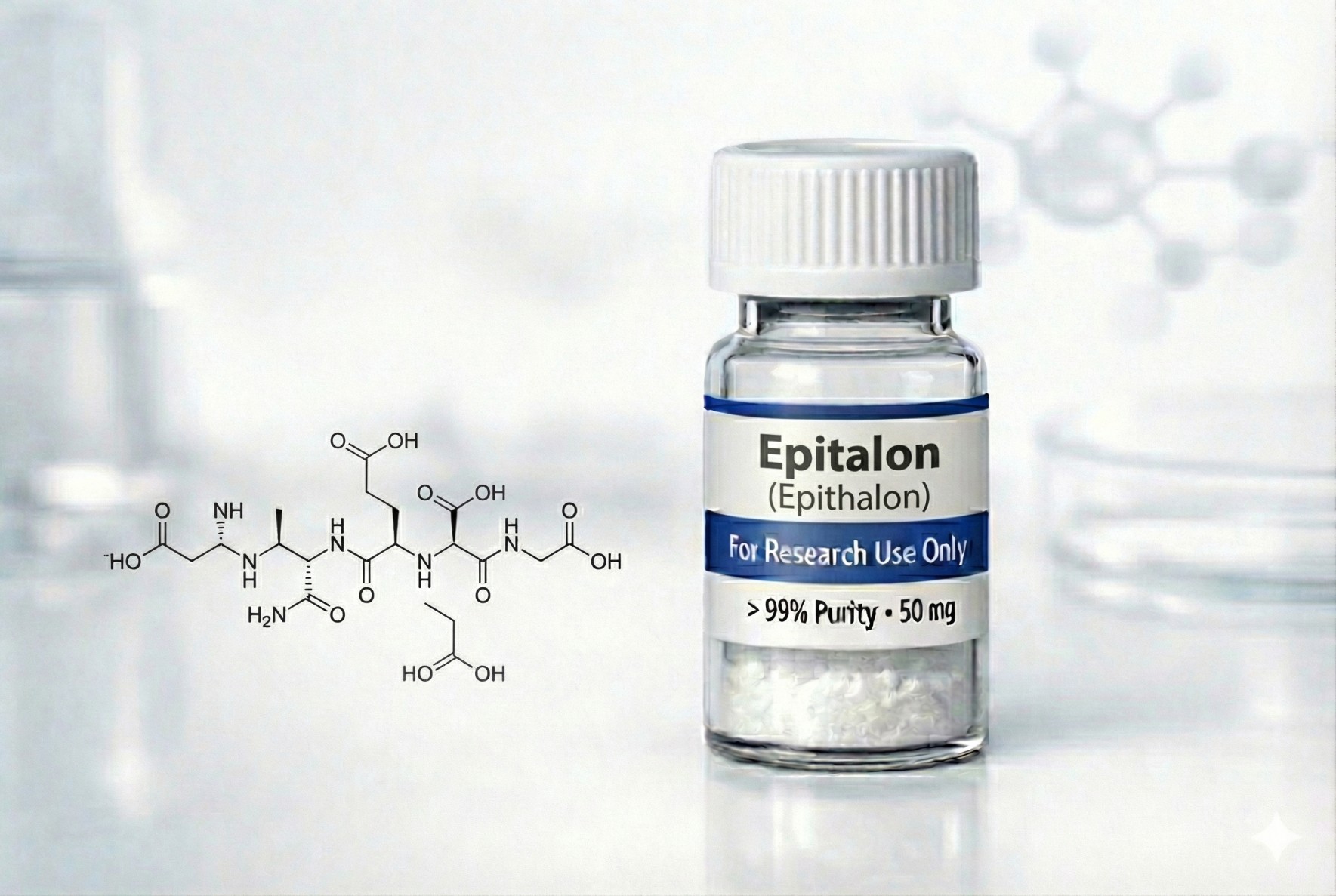
Epitalon (Epithalon)

Key clinical studies: Khavinson VK et al. (2003, 2006), Korkushko OV et al. (2011)

Key preclinical studies: Al-dulaimi S et al. (2025), Khavinson VK et al. (2003)

Epitalon (Ala-Glu-Asp-Gly, AEDG) is a synthetic tetrapeptide based on Epithalamin, a bovine pineal gland extract discovered by Russian gerontologist Vladimir Khavinson in 1973. The peptide (molecular weight 390 Da) was later identified in human pineal gland extracts in 2017. Epitalon activates telomerase in human cells, increasing telomere length by an average of 33.3% and extending the division limit of human fibroblasts from 34 to 44 passages. A landmark 2025 study demonstrated Epitalon upregulates hTERT mRNA expression and telomerase activity in normal human epithelial and fibroblast cells, while activating Alternative Lengthening of Telomeres (ALT) in cancer cells. Epitalon restores melatonin production in aged pinealocytes by increasing AANAT and pCREB expression, and selectively protects aged human pineal cells from age-related decline. In Russian clinical trials involving 266 elderly patients with cardiovascular disease followed for 6-12 years, Epithalamin (containing Epitalon) reduced all-cause mortality by 28-50%, cardiovascular mortality by 50%, and significantly normalized circadian melatonin rhythms and metabolic parameters. Animal studies show Epitalon extends maximum lifespan in mice by up to 42%, reduces spontaneous tumor incidence, and decreases chromosomal aberrations. The FDA designates Epitalon as Category 2 with “significant safety risks” including potential immunogenicity, prohibiting compounded use. As of January 2026, Epitalon has never been FDA-approved and is available only as research-grade peptide explicitly not suitable for human consumption.pmc.ncbi.nlm.nih+10

$150.00

- +

Description:

Epitalon (also known as Epithalon or Epithalone) is a synthetic tetrapeptide consisting of four amino acids: Alanine-Glutamic acid-Aspartic acid-Glycine (Ala-Glu-Asp-Gly, AEDG) with molecular weight 390 Da. The peptide was developed by Russian gerontologist Professor Vladimir Khavinson based on the amino acid composition of Epithalamin, a polypeptide extract from bovine pineal glands first described in 1973.pubmed.ncbi.nlm.nih+2

Natural Occurrence:

For decades, Epitalon’s presence in the human body remained unconfirmed until 2017, when it was detected for the first time in physiological human pineal gland extract. This discovery explained why synthetic Epitalon exhibits similar but more intense biological effects compared to natural Epithalamin extract.swiftpeptides+1

Structural Characteristics:

Epitalon is primarily studied in its free-base form, though commercial preparations exist as acetate or trifluoroacetic acid (TFA) salts. The peptide consists of standard α-peptide bonds connecting the four amino acids.pmc.ncbi.nlm.nih+1

Pharmacological Properties:

Some sources assert Epitalon is a low-hydrolysable peptide that can be taken orally, though most research has employed subcutaneous injection. The peptide demonstrates tissue-specific activity, particularly affecting subcortical structures like the pineal gland while showing minimal effects on hepatocytes or certain other cell types.swiftpeptides+1

Routes of Administration:

Research studies have employed multiple administration routes:

  • Subcutaneous injection: Most common route in animal and human studies
  • Oral administration: Limited data; some sources claim bioavailability
  • Topical application: Minimal research
  • Intraperitoneal: Used in animal studies

Regulatory Status:

FDA Classification: The FDA designates Epitalon as a Category 2 bulk drug substance that “poses a risk of immunogenicity, in which the body reacts to a substance as though it were a threat and mounts an immune response against it”. The FDA warns such immune responses can be life-threatening. This Category 2 designation prohibits compounding pharmacies from using Epitalon.innerbody+1

Current Legal Status: As of January 2026, Epitalon is not available as pharmaceutical-grade prescription in the United States. All Epitalon products are research-grade peptides explicitly not suitable for human consumption or use. The FDA has issued warning letters to vendors selling peptides labeled as “research compounds” intended for human use.atria+1

International Status: Epitalon has been used in Russia for decades but remains unapproved by regulatory agencies in Western countries. No pharmaceutical-grade formulation exists for clinical use outside research settings.


How It Works


Telomerase Activation and Telomere Elongation

Epitalon’s most studied anti-aging mechanism involves telomerase activation and telomere maintenance.pmc.ncbi.nlm.nih+3

Telomere Biology: Telomeres are repetitive DNA sequences (TTAGGG in humans) at chromosome ends that protect against DNA damage. Normal human somatic cells lose 50-70 base pairs per cell division due to the “end replication problem,” eventually triggering replicative senescence (Hayflick limit). Telomere length is considered a biomarker of biological aging.swiftpeptides+1

hTERT Expression Upregulation:

A 2025 study by Al-dulaimi et al. demonstrated Epitalon significantly upregulates hTERT (human telomerase reverse transcriptase) mRNA expression in multiple human cell lines:pmc.ncbi.nlm.nih+1

Cancer cells:

  • 21NT breast cancer: 12-fold hTERT increase at 1 μg/ml
  • BT474 breast cancer: 5-fold hTERT increase at 0.5 μg/ml

Normal cells (3-week treatment with 1 μg/ml):

  • IBR.3 fibroblasts: Significant hTERT upregulation
  • HMEC epithelial cells: Significant hTERT upregulation

The increase in hTERT was lower in normal cells than cancer cells, suggesting normal cells have more robust telomerase regulation requiring promoter activation to initiate hTERT expression.swiftpeptides+1

Telomerase Activity Enhancement:

While hTERT upregulation occurred in all cell types, telomerase enzyme activity showed cell-type specific patterns:pmc.ncbi.nlm.nih+1

Normal cells: Epitalon significantly increased telomerase activity:

  • IBR.3 fibroblasts: 4-fold increase
  • HMEC epithelial cells: 26-fold increase

Cancer cells: Despite hTERT upregulation, telomerase activity did not significantly increase in 21NT or BT474 cells. This unexpected finding led researchers to investigate Alternative Lengthening of Telomeres (ALT) mechanisms.swiftpeptides+1

Telomere Length Extension:

Epitalon treatment produced dose-dependent telomere elongation in all tested human cell lines:pmc.ncbi.nlm.nih+1

Cancer cells (4-day treatment):

  • 21NT: Telomere length increased from 2.4 kb to 4 kb at 0.5-1 μg/ml
  • BT474: Maximum telomere length of 8 kb at 0.2 μg/ml

Normal cells (3-week treatment with 1 μg/ml):

  • IBR.3 fibroblasts: Significant telomere extension
  • HMEC epithelial cells: Significant telomere extension

Normal cells required longer treatment duration (3 weeks vs. 4 days) to achieve telomere elongation, as they lack pre-existing telomere maintenance mechanisms that must be activated.swiftpeptides+1

Extended Cellular Lifespan:

Khavinson et al. (2004) demonstrated Epitalon-treated human fetal fibroblasts continued dividing beyond the Hayflick limit:pmc.ncbi.nlm.nih+1

  • Control fibroblasts: Lost mitotic ability after 34th passage
  • Epitalon-treated fibroblasts: Continued dividing through 44th passage

Epitalon increased telomere length in PHA-stimulated human lymphocytes by an average of 33.3%.swiftpeptides+1

Alternative Lengthening of Telomeres (ALT) Activation

A groundbreaking 2025 discovery revealed Epitalon activates ALT specifically in cancer cells but not normal cells.pmc.ncbi.nlm.nih+1

ALT Mechanism: ALT is a telomerase-independent mechanism for telomere maintenance involving homologous recombination. ALT is characterized by the presence of PML (promyelocytic leukemia) bodies—nuclear structures containing telomeric DNA.swiftpeptides+1

Cancer Cell ALT Activation:

C-circle assay (quantitative measure of ALT activity) showed:pmc.ncbi.nlm.nih+1

  • 21NT breast cancer: 10-fold increase in ALT activity
  • BT474 breast cancer: 3-fold increase in ALT activity
  • Immunofluorescence confirmed significant elevation of PML bodies in both cancer cell lines

Normal Cell Minimal ALT:

In contrast, normal cells showed little to no ALT activation:swiftpeptides+1

  • IBR.3 fibroblasts: No increase in ALT activity
  • HMEC epithelial cells: Insignificant increase

Mechanistic Hypothesis:

Researchers propose Epitalon activates ALT through multiple potential mechanisms:pmc.ncbi.nlm.nih+1

DNA Binding: Epitalon binds preferentially to methylated cytosine in DNA, particularly CAG sequences susceptible to DNA methylation. This binding may trap proteins on DNA strands, inducing DNA damage and double-strand breaks that trigger ALT in ATRX-deficient cells.pmc.ncbi.nlm.nih+1

Histone H1 Interaction: Epitalon binds to linker histone proteins H1.3 and H1.6, influencing epigenetic regulation. Histone H1 is expressed at higher levels in normal tissues and lower levels in breast cancer cells. Cancer cells’ reduced H1 levels may make them more susceptible to ALT activation when Epitalon binds to residual H1, while normal cells with higher H1 levels remain resistant.swiftpeptides+3

H19 Derepression: By binding and inhibiting H1.3, Epitalon may derepress H19—a non-coding gene encoding miRNAs that downregulate telomerase activity. This could explain why cancer cells show hTERT upregulation without increased telomerase activity, allowing ALT to become the primary telomere maintenance mechanism.swiftpeptides+1

Safety Implication: The finding that Epitalon activates telomerase in normal cells but ALT in cancer cells suggests “epitalon can be safely used in healthy individuals to maintain telomeres and thereby influence the aging process,” as ALT was not activated in normal cells.pmc.ncbi.nlm.nih+1

Melatonin Production and Pineal Gland Function

Epitalon directly affects melatonin synthesis and pineal gland health.gethealthspan+2

Melatonin Synthesis Pathway Activation:

Epitalon increases expression of two key enzymes in pineal gland melatonin synthesis:gethealthspan+2

AANAT (arylalkylamine N-acetyltransferase): Rate-limiting enzyme in melatonin synthesisgethealthspan

pCREB (phosphorylated cAMP response element-binding protein): Transcription factor regulating AANAT expressiongethealthspan

Studies in rat pinealocyte cultures showed Epitalon significantly elevated AANAT and pCREB concentrations in culture medium, indicating direct effects on melatonin synthesis. Epitalon demonstrated more prolonged action than comparative peptide Vilon and was significantly more potent after three hours.pmc.ncbi.nlm.nih+1

Pineal Cell Protection:

A 2020 study revealed Epitalon’s tissue-specific activity on the pineal gland:swiftpeptides+1

Aging model: The aging process in cultured cells was characterized by:

  • Drop in MitoTracker Red mitochondrial labeling
  • Compensatory rise in L7A ribosomal protein synthesis

Results:

  • Human thymocytes: Epitalon showed no impact on aging processes
  • Human pineal cells: Epitalon effectively and selectively safeguarded aged human pineal cells from the aging processpmc.ncbi.nlm.nih+1

This validated Epitalon’s tissue-specific activity on the pineal gland.swiftpeptides+1

Circadian Rhythm Restoration:

In aged Rhesus monkeys, Epitalon treatment:gethealthspan

  • Stimulated melatonin production
  • Restored youthful melatonin secretion patterns
  • Normalized cortisol rhythms in a time-of-day-dependent manner

These changes suggest Epitalon supports broader endocrine recalibration in aging organisms.gethealthspan

Clinical Significance:

Aging diminishes melatonin output by up to 75%, leading to weaker circadian cues and downstream systemic dysfunction. Epitalon’s capacity to restore melatonin output and genomic rhythm may impact lifespan and healthspan beyond sleep improvement. The circadian clock is a master regulator of aging biology; disruptions accelerate cellular aging, impair immune surveillance, and increase disease risk.gethealthspan

Antioxidant and Anti-Inflammatory Effects

Reactive Oxygen Species (ROS) Reduction:

Multiple studies demonstrate Epitalon’s antioxidant properties:pmc.ncbi.nlm.nih+1

Drosophila studies: Epitalon (0.00001% w/w) added to larval nutritional medium:

  • Reduced conjugated hydroperoxides in adult flies
  • Reduced Schiff’s bases (lipid peroxidation products)
  • Inhibited ROS formation in mitochondria and cytosol
  • Increased superoxide dismutase (SOD) activity

Epitalon was more effective than natural Epithalamin at 1/1000th the dose.swiftpeptides+1

Oocyte Protection: In mouse oocytes undergoing in vitro aging:aging-us

  • 0.1 mM Epitalon reduced intracellular ROS
  • Reduced oocyte fragmentation
  • Improved mitochondrial membrane potential
  • Increased mtDNA copy number
  • Reduced DNA damage (γH2AX fluorescence)
  • Decreased apoptosis incidence

Gene Expression: Epitalon increased expressions of genes encoding antioxidant enzymes in human cells:pmc.ncbi.nlm.nih+1

  • SOD-1 (superoxide dismutase)
  • NQO1 (NAD(P)H quinone dehydrogenase)
  • Catalase

Researchers hypothesized Epitalon may directly bind to Keap1/Nrf2 promoters governing antioxidant enzyme expression.swiftpeptides+1

Chromosomal Stability and Antimutagenic Effects

Epitalon significantly reduces chromosomal aberrations and demonstrates antimutagenic activity.pmc.ncbi.nlm.nih+1

Chromosomal Aberration Reduction:

Studies in multiple mouse strains (SAMP-1, SAMR-1, SHR) following 10 months of Epitalon treatment showed:

  • SAMP-1 mice: Higher baseline frequency of bone marrow chromosomal abnormalities
  • Epitalon reduced chromosomal aberrations by 17.1% (p<0.05) in all strains
  • Effect exceeded that of melatonin treatmentswiftpeptides+1

Antimutagenic Activity:

Human lymphocyte studies demonstrated:pmc.ncbi.nlm.nih+1

  • Zinc, Cobalt, and Nickel exhibited mutagenic effects on chromatin
  • Epitalon exhibited antimutagenic characteristics when co-administered with these metals
  • Epitalon prevented heavy metal-induced chromosomal damage

Mouse studies using sperm head abnormality and micronuclei assays confirmed significant antimutagenic action in both albino and gray mice.swiftpeptides+1

Gene Expression Modulation

Epitalon demonstrates broad effects on gene transcription.pmc.ncbi.nlm.nih+1

Heart Gene Expression (Mice):

15,247 genes investigated following Epitalon treatment:swiftpeptides+1

  • Activated expression of 194 genes (up to 6.61-fold increase)
  • Inhibited expression of 48 genes (up to 2.71-fold decrease)
  • Patterns consistent with inhibition of spontaneous tumor development

Brain Gene Expression (Mice):

16,897 transcripts studied at 1/10th the cardiac dose:pmc.ncbi.nlm.nih+1

  • Affected 53 gene expressions
  • Major differences compared to melatonin treatment
  • Effects primarily on genes responsible for:
    • Nucleic acid transport and synthesis
    • Apoptosis
    • Cell cycle regulation

Interleukin-2 (IL-2) Modulation:

Studies in mouse splenocytes showed Epitalon substantially increased IL-2 mRNA levels after 5 hours. IL-2 is a critical cytokine for T-cell proliferation and immune function.swiftpeptides+1

Neuroprotective Effects

Enzyme Activity: Epitalon increased activity of acetylcholinesterase (AChE) and butyrylcholinesterase (BuChE) by 10-25% in secreted fractions while decreasing activity in soluble and membrane-bound protein fractions. This suggests altered enzyme metabolism relevant to cholinergic deficiency diseases.pmc.ncbi.nlm.nih+1

Amyloid Precursor Protein (APP): Epitalon increased secretion of soluble APP by 20%, positioning it as a candidate for treating cognitive disorders associated with amyloid metabolism.swiftpeptides+1

Neuronal Differentiation: Epitalon increased expression of neuronal markers in stem cells:pmc.ncbi.nlm.nih+1

  • GAP43 (Growth Associated Protein 43)
  • Nestin
  • β-tubulin III
  • Doublecortin

DNA Damage Protection: In neurons derived from fibroblasts, Epitalon reduced DNA damage (decreased 8-hydroxydeoxyguanosine levels) and increased dendritic complexity (primary/terminal dendrites, total dendritic length, junctions).swiftpeptides+1


Research Evidence


Human Clinical Trials—Elderly Cardiovascular Patients

Multiple Russian clinical trials by Vladimir Khavinson and colleagues examined Epithalamin (containing Epitalon) in elderly patients with cardiovascular disease.

Study 1: 12-Year Follow-Up (N=266)pubmed.ncbi.nlm.nih

Khavinson VK, et al. Geroprotective effect of epithalamine (pineal gland peptide preparation). Bull Exp Biol Med. 2006;142(3):356-9.

Design: 12-year randomized clinical study in elderly patients with coronary disease and accelerated cardiovascular aging.

Treatment: Long-term Epithalamin administration (6 courses over multiple years) in addition to basic therapy.

Study Population: Elderly patients with coronary disease and accelerated aging of cardiovascular system.

Results:pubmed.ncbi.nlm.nih

  • All-cause mortality reduced by 28% after 12 years (p<0.01)
  • Cardiovascular mortality reduced by 50% in treated group
  • Incidence of cardiovascular failure: 2-fold lower
  • Incidence of respiratory diseases: 2-fold lower
  • Decreased functional age and degree of cardiovascular aging
  • Increased exercise tolerance

Study 2: 6-Year Follow-Up (N=266)pubmed.ncbi.nlm.nih

Khavinson VK, Anisimov VN. Peptides of pineal gland and thymus prolong human life. Neuro Endocrinol Lett. 2003;24(3-4):233-40.

Design: 6-year observational study examining Epithalamin alone, Thymalin (thymus peptide) alone, or combination treatment.

Treatment Groups:

  • Epithalamin alone
  • Thymalin alone
  • Epithalamin + Thymalin combination
  • Control (standard care only)

Study Population: 266 elderly patients (aged 60-84 years).

Results (Mortality Reduction vs. Control):pubmed.ncbi.nlm.nih

  • Thymalin group: 2.0-2.1-fold mortality reduction
  • Epithalamin group: 1.6-1.8-fold mortality reduction
  • Thymalin + Epithalamin combination: 2.5-fold mortality reduction
  • 6-year Thymalin + Epithalamin: 4.1-fold mortality reduction

“Such a significant improvement in the health state of the peptide-treated patients correlated with decreased mortality rate during observation”.pubmed.ncbi.nlm.nih

Study 3: 3-Year Cardiovascular Study (N=79)pubmed.ncbi.nlm.nih

Korkushko OV, et al. Peptide Geroprotector From the Pituitary Gland Inhibits Rapid Aging in SAMP Mice. Bull Exp Biol Med. 2012;152(5):615-9.

Design: 3-year randomized comparative study.

Treatment: Epithalamin (6 courses over 3 years) in addition to basic therapy (n=39) vs. basic therapy alone (n=40).

Study Population: Elderly coronary patients with rapidly aging cardiovascular system.

Results:pubmed.ncbi.nlm.nih

  • Decelerated aging of cardiovascular system
  • Prevented age-associated impairment of physical endurance
  • Normalized circadian rhythm of melatonin production
  • Normalized carbohydrate metabolism
  • Normalized lipid metabolism
  • Significantly lower mortality in Epithalamin group vs. control

Study Limitations:

While these Russian clinical trials report substantial mortality benefits, critical limitations exist:droracle

  • Older studies from 1990s-2000s with limited methodological detail
  • Lack modern Phase III randomized controlled trial standards required for FDA approval
  • Most evidence published in Russian journals with limited peer review
  • No replication studies in Western populations
  • Study designs and statistical methods not fully transparent

The best safety evidence is a 2002 trial (N=162) where nobody in the Epithalamin group reported serious side effects.innerbody

Animal Studies—Lifespan Extension

Mouse Lifespan Studies:

CBA Mice (Anisimov et al.):pmc.ncbi.nlm.nih+1

21-month study examining multiple parameters:

Body weight and activity:

  • No significant changes in body weight or food consumption
  • Physical activity decreased initially (first 3 months, p<0.001) but normalized by study end
  • No effects on muscular strength or fatigability
  • No changes in age-related estrus functionality

Survival:

  • 4.0-fold more Epitalon-treated mice reached age 23 months (p<0.01)
  • Oldest control mice: 24 months
  • Oldest Epitalon-treated mice: 34 months (42% lifespan extension)

FVB/N HER-2/neu Mice:swiftpeptides+1

Female mice transgenic for HER-2/neu breast cancer gene:

  • Extended lifespan with Epitalon treatment
  • Reduced total number of breast adenocarcinomas (p<0.05)
  • 3.7-fold lower HER-2/neu mRNA expression
  • Smaller mammary tumor size

Drosophila Lifespan:pmc.ncbi.nlm.nih+1

Wild strain Cantos-S treated with Epitalon during early developmental stages:

  • Increased imago lifespan by up to 16% (both sexes)
  • Survival curves showed effects primarily in mature and old flies
  • No genotoxic effects observed
  • Epitalon effective at 16,000-fold lower concentration than melatonin for comparable lifespan extension

Tumor Incidence Reduction

Long-Term CBA Mouse Study:swiftpeptides+1

Epitalon administered at 0.1 µg/mouse:

  • Reduced overall tumor incidence (p<0.05)
  • Reduced tumor multiplicity
  • Decreased chromosomal instability (directly connected to carcinogenesis)

FVB/N HER-2/neu Mice:pmc.ncbi.nlm.nih+1

  • Lower total number of breast adenocarcinomas (p<0.05)
  • Smaller tumor size in mammary tissue

C3H/He Mice (Kossoy et al.):swiftpeptides+1

6.5-month study comparing Epitalon to saline control:

  • Confirmed antitumor effect
  • Reduced tumor incidence
  • Favorable changes in tumor localization and type

SHR Mice:pmc.ncbi.nlm.nih+1

Study found no effect on overall tumor incidence in this specific strain, though bone marrow chromosomal aberrations decreased 17.1% (p<0.05).


Current Status & Considerations


FDA Prohibition and Safety Concerns

Category 2 Designation:

The FDA includes Epitalon in its group of peptides that pose a “risk of immunogenicity, in which the body reacts to a substance as though it were a threat and mounts an immune response against it”. The FDA warns that such immune responses can be life-threatening.innerbody

This Category 2 designation means compounding pharmacies are prohibited from using Epitalon in any formulation. The FDA flags Epitalon alongside BPC-157, LL-37, DSIP, injectable GHK-Cu, and thymosin-β4 fragment as bulk substances presenting potential safety risks.atria

No Pharmaceutical-Grade Product:

“Currently, epitalon is not available as a pharmaceutical-grade prescription in the United States. Therefore, the only epitalon on the market is research-grade, which is not suitable for human consumption or use“.innerbody

Research-grade peptides aren’t subject to quality controls of pharmaceutical-grade counterparts, risking “dangerously low purity that increases the risk of adverse events, including immunogenicity”.innerbody

Safety Data Gap:

A 2025 systematic review stated “information regarding critical issues about this peptide’s safety is missing”. The strongest human safety evidence comes from a 2002 trial (N=162) where nobody reported serious side effects, but this represents limited data compared to modern safety requirements.innerbody

Evidence Base Summary

Human Clinical Evidence:

Strengths:

  • 3 long-term trials (3-12 years) in 266+ elderly patients
  • Consistent mortality reduction findings (28-50% all-cause, 50% cardiovascular)
  • Normalized circadian rhythms and metabolic parameters
  • No serious adverse events reported in limited published data

Critical Limitations:droracle

  • Older Russian studies (1990s-2000s) lacking modern Phase III trial rigor
  • Limited methodological detail in publications
  • No replication in Western populations
  • Statistical methods not fully transparent
  • Most published in Russian journals with limited international peer review

Preclinical Evidence:

Robust animal data:

  • Lifespan extension: 16-42% across species (mice, flies)
  • Tumor incidence reduction in multiple cancer models
  • Chromosomal stability improvement
  • Consistent antioxidant effects

Strong cellular mechanisms:

  • 2025 study provides quantitative telomerase/ALT data in human cells
  • Demonstrated hTERT upregulation and telomere elongation
  • Pineal cell protection confirmed
  • Melatonin synthesis pathway activation established

Theoretical Safety Concerns

Immunogenicity Risk:

The FDA’s primary concern is immunogenicity. While small peptides (4 amino acids) are typically below the threshold for strong immune responses, repeated injection of any peptide can theoretically trigger antibody formation. Epitalon’s endogenous occurrence in human pineal glands may reduce this risk, but no systematic human immunogenicity studies exist.innerbody

ALT Activation in Cancer:

The 2025 discovery that Epitalon activates ALT specifically in cancer cells raises important questions:swiftpeptides+1

Positive interpretation: ALT activation occurred only in cancer cells, not normal cells, suggesting safety for healthy individuals.pmc.ncbi.nlm.nih+1

Concern: In individuals with undiagnosed cancer, Epitalon could theoretically promote tumor growth through ALT-mediated telomere maintenance. However, animal studies showed reduced tumor incidence, not increased.swiftpeptides+1

Telomerase and Cancer Risk:

Telomerase activation in normal cells could theoretically increase cancer risk by allowing cells with oncogenic mutations to bypass senescence. However:

  • Telomerase activation alone doesn’t cause cancer (requires multiple mutations)
  • Telomerase gene therapy in mice extended lifespan without increasing cancerswiftpeptides
  • Epitalon reduced spontaneous tumor incidence in long-term mouse studiespmc.ncbi.nlm.nih+1

Product Quality Concerns:

Without pharmaceutical-grade manufacturing, research-grade Epitalon may contain:

  • Varying peptide content (actual vs. labeled)
  • Synthesis byproducts or incomplete peptides
  • Bacterial endotoxins (if sterility compromised)
  • Unknown contaminants
  • Aggregated peptide (increased immunogenicity risk)

Research Gaps and Future Directions

Critical Human Studies Needed:

Phase I Safety Trials: Systematic dose-escalation studies establishing:

  • Maximum tolerated dose
  • Pharmacokinetics (absorption, distribution, metabolism, excretion)
  • Immunogenicity assessment with repeated dosing
  • Adverse event profiling

Phase II Efficacy Trials: Placebo-controlled studies examining:

  • Telomere length changes in normal aging
  • Circadian rhythm restoration
  • Age-related biomarker improvements
  • Optimal dosing and treatment duration

Phase III Mortality/Morbidity Trials: Large-scale RCTs in Western populations to replicate Russian findings:

  • All-cause mortality
  • Cardiovascular outcomes
  • Cancer incidence (safety signal)
  • Quality of life measures
  • Long-term follow-up (10+ years)

Mechanistic Questions:

  • Does Epitalon activate ALT in all cancer types or only specific cancers?
  • What factors predict telomerase vs. ALT activation?
  • How does Epitalon cross-talk with endocrine systems beyond melatonin?
  • What is the minimum effective dose and optimal treatment schedule?
  • Do effects persist after treatment cessation, and for how long?

Delivery Optimization:

  • Comparative bioavailability: oral vs. sublingual vs. intranasal vs. subcutaneous
  • Modified formulations to enhance stability and reduce immunogenicity
  • Targeted delivery systems for specific tissues

Comparison to Other Longevity Interventions

  1. TA-65 (Telomerase Activator):
  • TA-65: Plant-derived small molecule; limited human data; commercially available supplement
  • Epitalon: Synthetic peptide; more robust animal data; FDA-prohibited; no legal access
  1. Rapamycin (mTOR Inhibitor):
  • Rapamycin: FDA-approved immunosuppressant; extensive human safety data; being repurposed for longevity
  • Epitalon: Never approved; limited human safety data; prohibited in compounding
  1. Metformin (Metabolic Modulator):
  • Metformin: FDA-approved diabetes drug; massive human safety database; TAME trial ongoing
  • Epitalon: No approval; minimal Western human data; research-grade only
  1. NAD+ Precursors (NMN/NR):
  • NAD+ precursors: Generally Recognized As Safe (GRAS); commercially available; limited longevity data
  • Epitalon: FDA Category 2; prohibited; stronger animal lifespan data

Epitalon’s Unique Position: Among longevity interventions, Epitalon has the strongest preclinical lifespan extension data (16-42% across species) and suggestive human mortality benefits (28-50% reduction), but faces the strictest regulatory barriers and most limited safety characterization.


Footnotes


  1. Araj SK, Brzezik J, Mądra-Gackowska K, Szeleszczuk Ł. Overview of Epitalon—Highly Bioactive Pineal Tetrapeptide with Promising Properties. Int J Mol Sci. 2025;26(6):2691. PMID: 40141333.
  2. Al-dulaimi S, Thomas R, Matta S, Roberts T. Epitalon increases telomere length in human cell lines through telomerase upregulation or ALT activity. Biogerontology. 2025;26(5):178. PMID: 40908429.

References


Clinical Trials

Khavinson VK, Anisimov VN. Peptides of pineal gland and thymus prolong human life. Neuro Endocrinol Lett. 2003;24(3-4):233-40.

Khavinson VK, et al. Geroprotective effect of epithalamine (pineal gland peptide preparation). Bull Exp Biol Med. 2006;142(3):356-9.

Korkushko OV, et al. Peptide Geroprotector From the Pituitary Gland Inhibits Rapid Aging. Bull Exp Biol Med. 2012;152(5):615-9.

Key Research Studies

Al-dulaimi S, Thomas R, Matta S, Roberts T. Epitalon increases telomere length in human cell lines through telomerase upregulation or ALT activity. Biogerontology. 2025;26(5):178.

Araj SK, Brzezik J, Mądra-Gackowska K, Szeleszczuk Ł. Overview of Epitalon—Highly Bioactive Pineal Tetrapeptide with Promising Properties. Int J Mol Sci. 2025;26(6):2691.

Regulatory and Safety

Innerbody. Epitalon Peptide | Benefits, Safety & Buying Advice .

Atria Health. Peptides for Longevity.


Disclaimer


This content is for educational and research purposes only. Epitalon is designated by the FDA as a Category 2 bulk drug substance with “significant safety risks” including potential life-threatening immunogenicity. It is prohibited from compounding and not available as pharmaceutical-grade prescription in the United States. All available Epitalon is research-grade explicitly not suitable for human consumption or use. While Russian clinical trials suggest mortality benefits in elderly patients and animal studies show lifespan extension, these findings lack replication in Western populations using modern trial standards. The 2025 discovery that Epitalon activates ALT in cancer cells (but not normal cells) requires further investigation. No systematic human safety studies exist for Epitalon. This peptide should be considered investigational only, with human use carrying unknown risks.


Latest News

Latest Research Updates

Curated news and publications on peptides, metabolic research, and cellular energy modulation.
Epitalon (Epithalon)Epitalon (Epithalon)
$150.00
- +