
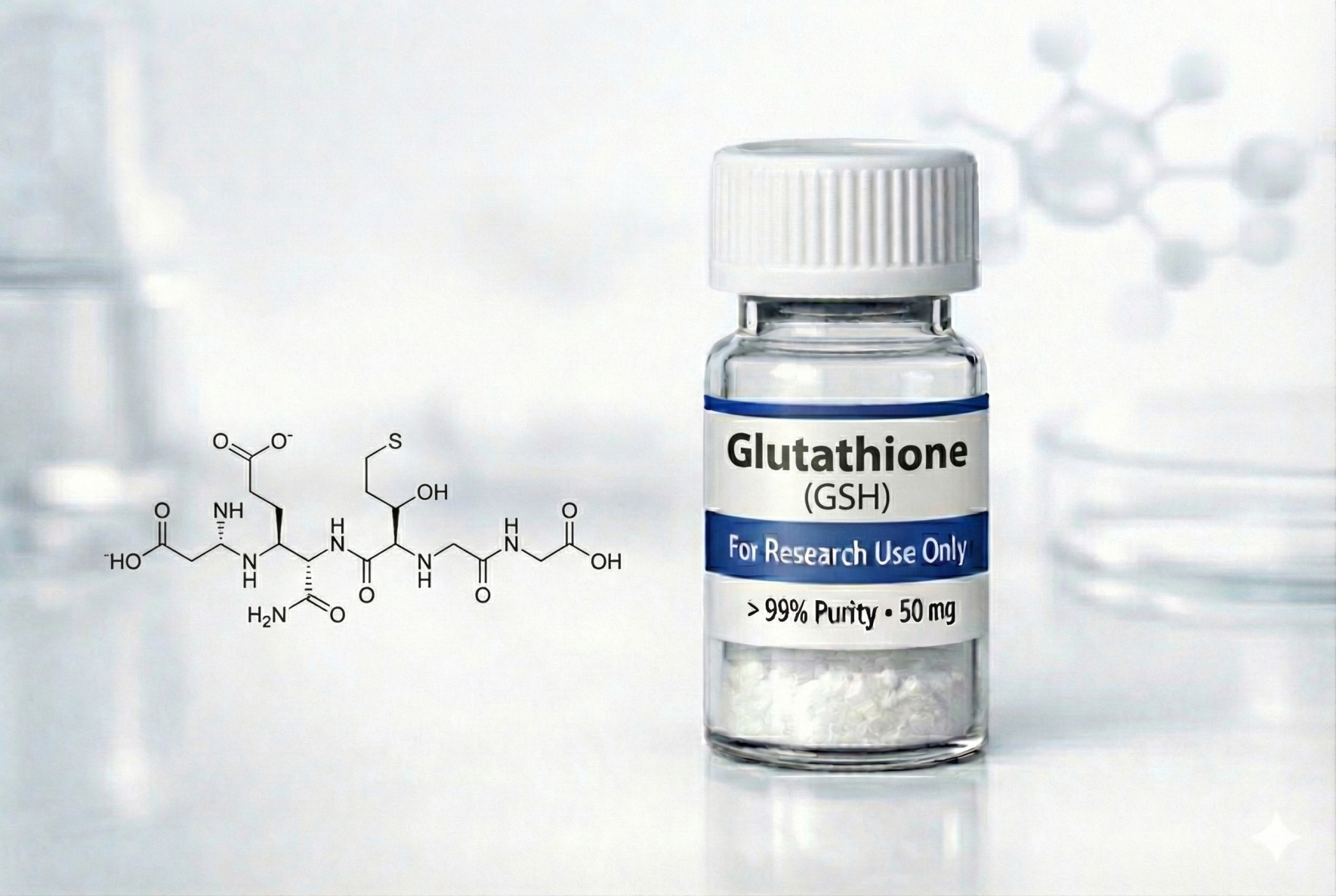
Glutathione (GSH) is a ubiquitous water-soluble tripeptide found in millimolar concentrations throughout the human body, consisting of three amino acids: glutamic acid, cysteine, and glycine linked by unusual peptide bonds. The molecule exists in two forms: reduced glutathione (GSH) with a free thiol (-SH) group, and oxidized glutathione (GSSG) where two GSH molecules are linked by a disulfide bond. The thiol function is critical for GSH’s biological activity.pmc.ncbi.nlm.nih+1
Synthesis and Regulation:
GSH is synthesized intracellularly through a two-step ATP-dependent process:swiftpeptides
- Glutamate + cysteine → γ-glutamylcysteine (catalyzed by glutamate-cysteine ligase, the rate-limiting enzyme)
- γ-Glutamylcysteine + glycine → glutathione (catalyzed by glutathione synthetase)
Cysteine is the rate-limiting substrate for GSH synthesis, as its availability is significantly lower than glutamate and glycine. This explains why cysteine precursors like N-acetylcysteine (NAC) can enhance GSH production.swiftpeptides
Age-Related Decline:
Plasma GSH levels decrease significantly with age, declining from higher levels in youth to substantially lower concentrations by age 60. This deterioration of GSH homeostasis participates in the aging process and the appearance of age-related diseases. Tissue-specific decline is particularly dramatic in certain organs:sciencedirect+1
- Brain/Substantia Nigra: 40-50% reduction in Parkinson’s disease patientsmichaeljfox+1
- Plasma: Progressive decline from age 20 to 80sciencedirect
- Liver: Reduced levels in cirrhosis and chronic liver diseaseswiftpeptides
Redox Status and GSH/GSSG Ratio:
The ratio of reduced to oxidized glutathione (GSH/GSSG) serves as a primary marker of cellular redox status and antioxidative capacity. Healthy cells maintain a high GSH/GSSG ratio (typically >100:1), while oxidative stress decreases this ratio by converting GSH to GSSG. GSSG accumulation indicates periods of oxidative stress; restoration of normal redox equilibrium requires increasing the GSH/GSSG ratio.pmc.ncbi.nlm.nih+1
Bioavailability Challenges:
Oral Administration: Oral GSH suffers from extremely poor bioavailability due to degradation by γ-glutamyl transpeptidase (GGT), an intestinal enzyme that breaks down GSH into constituent amino acids. Studies show oral bioavailability below 1%. The differential absorption between humans and rodents—oral GSH works well in mice/rats but poorly in humans—is explained by differences in intestinal GGT quantity and activity.pmc.ncbi.nlm.nih+1
Sublingual Administration: Sublingual delivery bypasses intestinal degradation and hepatic first-pass metabolism, allowing intact GSH absorption through buccal mucosa. A 2015 study demonstrated sublingual GSH significantly increased plasma GSH levels and the GSH/GSSG ratio, while oral GSH paradoxically decreased these parameters.swiftpeptides
Intravenous Administration: IV GSH avoids absorption issues and directly raises blood glutathione levels. All successful Parkinson’s disease trials used IV administration (600-1400 mg).pubmed.ncbi.nlm.nih+2
Intranasal Administration: Intranasal GSH elevates brain GSH levels in Parkinson’s patients, with increases persisting at least 1 hour post-administration. This represents a promising non-invasive route for central nervous system delivery.nature
N-Acetylcysteine (NAC) as Precursor:
NAC, a cysteine precursor with oral bioavailability of 4-10%, undergoes first-pass hepatic metabolism where it is deacetylated to cysteine, which the liver uses to synthesize GSH de novo. However, NAC effectiveness depends on the body’s ability to synthesize glutathione, which diminishes with age and liver dysfunction.onlinelibrary.wiley+1
Regulatory Status:
GSH has never been FDA-approved as a pharmaceutical drug despite extensive clinical use since the 1980s. It is commercially available as:ivelements
- Dietary supplement: Oral capsules/tablets
- Compounded medications: IV formulations through compounding pharmacies
- Cosmetic ingredient: Topical formulations
How It Works
Master Antioxidant and Free Radical Scavenger
GSH is the most abundant intracellular low molecular weight antioxidant, functioning as a potent scavenger of free radicals and reactive oxygen species (ROS).ivelements+1
Direct Antioxidant Activity:
GSH directly neutralizes free radicals by donating electrons to reactive molecules, stabilizing them. The thiol group (-SH) of cysteine in GSH reacts with hydroxyl radicals (- OH), superoxide (O₂- ⁻), and other ROS, converting GSH to GSSG in the process.ivelements+1
Antioxidant Regeneration:
GSH is critical for regenerating other antioxidants including vitamin C (ascorbate) and vitamin E (tocopherols). The 2015 sublingual GSH study found that 3 weeks of sublingual GSH supplementation significantly increased plasma vitamin E levels (0.83 µmol/g, p=0.04), while oral GSH and NAC had no effect. This demonstrates GSH’s role in maintaining the antioxidant network.swiftpeptides
Glutathione Peroxidase System:
GSH serves as the electron donor for glutathione peroxidase (GPx) enzymes, which catalyze the reduction of hydrogen peroxide (H₂O₂) and lipid hydroperoxides to water and alcohols. This enzymatic system prevents oxidative damage to lipids, proteins, and DNA.swiftpeptides
Detoxification and Conjugation
GSH functions as the primary cellular detoxification agent through multiple mechanisms:ivelements+1
Phase II Detoxification: Glutathione S-transferases (GSTs) catalyze the conjugation of GSH with various electrophilic compounds (drugs, toxins, carcinogens, metabolites), forming glutathione conjugates that are more water-soluble and readily excreted.ivelements+1
Heavy Metal Chelation: GSH binds and eliminates heavy metals (lead, mercury, cadmium) from the body. The thiol groups form complexes with metal ions, facilitating their excretion and preventing DNA damage.ivelements
Xenobiotic Metabolism: GSH reacts with foreign compounds to form conjugates, enabling their elimination.swiftpeptides
Protein Thiol Buffer and Redox Signaling
Protein S-Glutathionylation: GSH functions as a thiol buffer for cellular proteins, forming reversible mixed disulfides with protein cysteine residues (S-glutathionylation). This post-translational modification protects proteins from irreversible oxidation and regulates protein function.swiftpeptides
Redox Signaling: The GSH/GSSG ratio controls redox-sensitive signaling pathways, influencing gene expression, cell proliferation, apoptosis, and immune responses.swiftpeptides
Essential Cofactor: GSH is an essential cofactor for numerous enzymes including glutathione peroxidases, glutathione S-transferases, and glyoxalases.swiftpeptides
Immune System Enhancement
GSH plays critical roles in immune function:swiftpeptides
Lymphocyte Proliferation: GSH is required for T-cell and B-cell proliferation and optimal immune responses.swiftpeptides
HIV and Immune Deficiency: GSH deficiency is associated with impaired survival in HIV disease. Studies in animals showed GSH supplementation reverses age-associated decline in immune responsiveness.swiftpeptides
Inflammatory Modulation: GSH modulates cytokine production and inflammatory responses.
Mitochondrial Function and Energy Metabolism
Mitochondrial GSH Pool: Mitochondria maintain a distinct GSH pool critical for preventing oxidative damage from electron transport chain-generated ROS.swiftpeptides
Metabolic Enhancement: The 2017 NAFLD study found oral GSH reduced non-esterified fatty acids (NEFA) and improved lipid metabolism. Previous research showed GSH supplementation accelerates fatty acid utilization by upregulating peroxisome proliferator-activated receptor-γ coactivator-1α (PGC-1α) and mitochondrial DNA.swiftpeptides
DNA Repair and Cell Cycle Regulation
GSH affects 84 genes associated with DNA repair, upregulating 47 genes (≥50%) and downregulating 5 genes. This contributes to:pmc.ncbi.nlm.nih
- Protection against oxidative DNA damage
- Enhanced DNA repair capacity
- Regulation of cell cycle checkpoints
- Prevention of mutagenesis
Research Evidence
Parkinson’s Disease—Intravenous Glutathione
Study 1: Sechi et al., 1996 (N=9)scienceofparkinsons+1
Sechi G, Deledda MG, Bua G, et al. Reduced intravenous glutathione in the treatment of early Parkinson’s disease. Prog Neuropsychopharmacol Biol Psychiatry. 1996;20(7):1159-70.
Design: Open-label study in nine recently diagnosed, untreated Parkinson’s disease patients.
Treatment: Intravenous glutathione 600 mg twice daily for 30 days, followed by 4-month follow-up.
Results:pubmed.ncbi.nlm.nih+1
- Participants’ motor symptoms improved during treatment
- Benefits lasted 2-4 months following discontinuation of glutathione
- Well tolerated with no serious adverse events
Significance: First clinical demonstration that GSH could improve Parkinson’s motor symptoms, though open-label design limits interpretation.
Study 2: Hauser et al., 2009 (N=21, Placebo-Controlled)scienceofparkinsons
Design: Randomized, double-blind, placebo-controlled study.
Treatment: 21 Parkinson’s patients randomized to IV glutathione (1,400 mg) or placebo, administered 3 times weekly for 4 weeks (10 per group, one withdrawal).
Results:scienceofparkinsons
- Glutathione was well tolerated
- No withdrawals due to adverse events
- Efficacy results not fully published
Significance: First placebo-controlled trial of IV GSH in Parkinson’s, establishing tolerability.
Mechanistic Rationale:
Multiple studies demonstrate 40-50% GSH deficiency in the substantia nigra of Parkinson’s patients. This deficiency perpetuates:pubmed.ncbi.nlm.nih+1
- Oxidative stress
- Mitochondrial dysfunction
- Impaired autophagy
- Dopaminergic cell death
The Michael J. Fox Foundation notes: “While glutathione is a promising therapy for Parkinson’s, the benefit and efficacy have yet to be confirmed” in large-scale controlled trials.michaeljfox
Parkinson’s Disease—Intranasal Glutathione
Hauser RA, Lyons KE, McClain T, et al. Central nervous system uptake of intranasal glutathione in Parkinson’s disease. NPJ Parkinsons Dis. 2016;2:16002.nature
Design: Open-label study in 15 participants with mid-stage Parkinson’s disease using magnetic resonance spectroscopy to measure brain GSH.
Treatment: Intranasal reduced glutathione administration.
Results:nature
- First demonstration that intranasal GSH elevates brain GSH levels
- Increase persists at least 1 hour in subjects with PD
- Non-invasive delivery bypasses blood-brain barrier limitations
Significance: Establishes intranasal route as viable method for central nervous system GSH delivery, addressing major limitation of oral/IV routes that don’t efficiently cross blood-brain barrier.
Nonalcoholic Fatty Liver Disease (NAFLD)
Honda Y, Kessoku T, Sumida Y, et al. Efficacy of glutathione for the treatment of nonalcoholic fatty liver disease: an open-label, single-arm, multicenter, pilot study. BMC Gastroenterol. 2017;17:96.swiftpeptides
Design: Open-label, single-arm, multicenter pilot trial in 34 NAFLD patients; 29 completed the protocol.
Treatment: 3-month lifestyle intervention (diet/exercise) followed by oral glutathione 300 mg/day for 4 months.
Study Population: Mean age 56 years; 82.8% had dyslipidemia, 48.3% had diabetes.
Endpoints: Primary outcome was change in ALT; secondary outcomes included liver fat (CAP) and fibrosis (LSM) measured by vibration-controlled transient elastography.
Results (All Patients):swiftpeptides
- ALT significantly decreased (68.9 → 58.1 IU/L, p=0.014)
- Triglycerides decreased (195.2 → 163.6 mg/dL, p=0.007)
- NEFA decreased (651.2 → 533.5 μEq/L, p=0.013)
- Ferritin decreased (219.8 → 194.4 ng/mL, p=0.015)
- CAP (liver fat) trended toward decrease (295.7 → 285.4 db/m, p=0.07)
Results (ALT Responders vs. Non-Responders):swiftpeptides
Patients were divided based on median 12.9% ALT decrease:
- ALT Responders (N=15): Younger (50.7 vs. 61.7 years, p=0.011), lower HbA1c (5.94% vs. 6.9%, p=0.019), CAP significantly decreased (300.3 → 285.1 db/m, p=0.049)
- ALT Non-Responders (N=14): Older, more severe diabetes, ALT paradoxically increased
Mechanism:swiftpeptides
The study found protein-bound glutathione levels were abnormally elevated at baseline (much higher than healthy volunteers) and normalized after treatment, especially in ALT responders. This suggests oral GSH may increase incorporation of protein-bound glutathione into the liver or decrease pathological excretion.
Significance: First study examining oral GSH in NAFLD patients; demonstrates potential therapeutic effects despite low bioavailability, possibly through hepatic uptake of protein-bound GSH. Authors note: “Our pilot study suggests that oral administration of glutathione supports hepatic metabolism and improves NAFLD”.swiftpeptides
Bioavailability—Sublingual vs. Oral vs. NAC
Schmitt B, Vicenzi M, Garrel C, Denis FM. Effects of N-acetylcysteine, oral glutathione (GSH) and a novel sublingual form of GSH on oxidative stress markers: A comparative crossover study. Redox Biol. 2015;6:198-205.swiftpeptides
Design: Randomized crossover trial with 3-week treatment periods and 14-day washout.
Study Population: 20 volunteers with metabolic syndrome (mean age 58 years, BMI 28.6).
Treatments: Three 21-day periods comparing:
- Sublingual GSH: 150 mg 3× daily (450 mg/day total)
- Oral GSH: 150 mg 3× daily (450 mg/day total)
- NAC: 200 mg once daily
Primary Outcome: GSH/GSSG ratio (marker of cellular redox status).
Results (Bioavailability):swiftpeptides
| Parameter |
Oral GSH |
Sublingual GSH |
p-value |
| Total GSH change |
-33.41 µmol/L |
+27.65 µmol/L |
0.05 |
| Reduced GSH change |
-37.98 µmol/L |
+32.41 µmol/L |
0.03 |
| GSSG change |
+2.28 µmol/L |
-2.01 µmol/L |
0.04 |
Oral GSH paradoxically decreased plasma GSH levels, while sublingual GSH significantly increased both total and reduced GSH.swiftpeptides
Results (GSH/GSSG Ratio):swiftpeptides
| Treatment |
V1 (Baseline) |
V3 (End) |
Change |
vs. Oral GSH |
| NAC |
50.03 |
56.44 |
+7.38 |
p=0.01 |
| Oral GSH |
51.68 |
44.76 |
-6.92 |
– |
| Sublingual GSH |
47.55 |
56.97 |
+9.42 |
p=0.002 |
Sublingual GSH produced significantly higher GSH/GSSG ratios than oral GSH at all timepoints.swiftpeptides
Results (Vitamin E):swiftpeptides
Only sublingual GSH significantly increased plasma vitamin E levels (0.83 µmol/g, p=0.04) after 3 weeks, confirming GSH’s role in regenerating other antioxidants.swiftpeptides
Mechanism:swiftpeptides
Oral GSH undergoes partial hydrolysis and oxidation during digestion, requiring the liver to synthesize GSH de novo from precursors. Sublingual GSH is directly assimilated through buccal mucosa, bypassing hepatic first-pass metabolism and intestinal degradation.swiftpeptides
Significance: Demonstrates significant superiority of sublingual GSH over oral form in terms of bioavailability and positive effects on oxidative stress. Authors conclude: “Our results demonstrate the superiority of a new sublingual form of GSH over the oral GSH form and NAC”.swiftpeptides
Type 2 Diabetes and Oxidative Stress
Randomized Clinical Trial of How Long-Term Glutathione Supplementation Offers Protection. Front Pharmacol. 2022;13:862402.pmc.ncbi.nlm.nih
Design: Study examining GSH supplementation effectiveness during anti-diabetic treatment.
Study Population: 104 non-diabetic and 250 diabetic individuals aged 30-78 years.
Results:pmc.ncbi.nlm.nih
GSH supplementation during anti-diabetic therapy helps manage complications arising from hyperglycemia-induced oxidative stress.
Conditions Being Researched
Parkinson’s Disease
Research Status: Two clinical trials published; intranasal delivery demonstrated CNS uptake.pubmed.ncbi.nlm.nih+2
Mechanisms: Repletes 40-50% GSH deficiency in substantia nigra, reduces oxidative stress, improves mitochondrial function, enhances autophagy, protects dopaminergic neurons.michaeljfox+1
Evidence: IV GSH (600-1400 mg) improved motor symptoms with benefits lasting 2-4 months post-discontinuation; intranasal GSH increases brain GSH levels.scienceofparkinsons+2
Clinical Potential: The Michael J. Fox Foundation states: “While glutathione is a promising therapy for Parkinson’s, the benefit and efficacy have yet to be confirmed” in large-scale controlled trials. Ongoing trial: NCT07064005 evaluating gamma-glutamylcysteine (GGC) oral supplementation in early PD patients, measuring brain GSH enrichment via MR spectroscopy, motor function, and cognitive changes over 12 months.clinicaltrials+1
Nonalcoholic Fatty Liver Disease (NAFLD)
Research Status: One multicenter pilot trial published (N=29); additional studies ongoing.pmc.ncbi.nlm.nih+2
Mechanisms: Ameliorates oxidative stress, reduces lipotoxicity, decreases ferritin-mediated iron toxicity, enhances fatty acid utilization via PGC-1α upregulation, improves hepatic metabolism.swiftpeptides
Evidence: Oral GSH 300 mg/day significantly reduced ALT (p=0.014), triglycerides (p=0.007), NEFA (p=0.013), ferritin (p=0.015); liver fat (CAP) decreased significantly in ALT responders (p=0.049).swiftpeptides
Clinical Potential: Authors conclude: “Our pilot study suggests that oral administration of glutathione supports hepatic metabolism and improves NAFLD. Large-scale clinical trials are necessary to confirm the therapeutic effects”. Recent 2024 literature review examining 2014-2024 studies notes variable effects across NAFLD stages and calls for stage-specific studies.pmc.ncbi.nlm.nih+1
Metabolic Syndrome and Cardiovascular Disease
Research Status: Crossover trial demonstrated improvements in oxidative stress markers.swiftpeptides
Mechanisms: Improves GSH/GSSG ratio, increases vitamin E levels, may reduce cardiovascular risk through enhanced antioxidant status.swiftpeptides
Evidence: Sublingual GSH significantly improved GSH/GSSG ratio (p=0.002 vs. oral) and vitamin E levels (p=0.04) in metabolic syndrome patients.swiftpeptides
Epidemiological Links: GSH depletion associated with increased cardiovascular disease risk; decreased GSH levels observed in acute myocardial infarction.swiftpeptides
Chronic Obstructive Pulmonary Disease (COPD)
Research Status: GSH depletion well-documented in COPD; nebulized GSH studied.swiftpeptides
Mechanisms: Replenishes pulmonary GSH, reduces oxidative stress from cigarette smoke and inflammation, protects against further lung damage.swiftpeptides
Evidence: COPD patients show significant GSH deficiency; supplementation addresses this deficiency.swiftpeptides
Immune Function and HIV
Research Status: GSH deficiency associated with impaired HIV survival; animal studies show immune enhancement.swiftpeptides
Mechanisms: GSH required for lymphocyte proliferation, supports T-cell and B-cell function, modulates cytokine production.swiftpeptides
Evidence: Animal studies showed GSH supplementation reverses age-associated decline in immune responsiveness and enhances immune function; GSH deficiency associated with impaired survival in HIV disease.swiftpeptides
Clinical Trial: NCT03725241 examining effects of oral GSH on immune cell response and upper respiratory health symptomatology.clinicaltrials
Cancer Prevention
Research Status: Preclinical evidence in carcinogenesis models.swiftpeptides
Mechanisms: Scavenges carcinogenic free radicals, enhances detoxification of carcinogens via GST conjugation, protects against DNA damage.swiftpeptides
Evidence: Animal studies showed GSH supplementation protects against carcinogenesis process and inhibits experimental oral carcinogenesis.swiftpeptides
Aging and Age-Related Decline
Research Status: GSH decline with aging well-documented; supplementation studied as anti-aging intervention.swiftpeptides
Mechanisms: Plasma GSH levels decrease with age; deterioration of GSH homeostasis participates in aging process and age-related diseases.swiftpeptides
Evidence: Studies demonstrate progressive GSH decline from age 20 to 80; supplementation may counter negative effects of oxidative stress associated with aging.swiftpeptides
Acute Lung Injury
Research Status: Mouse models demonstrate protective effects.pmc.ncbi.nlm.nih
Mechanisms: Suppresses inflammatory cell infiltration, increases SOD activity, decreases pro-inflammatory cytokines.pmc.ncbi.nlm.nih
Toxic Exposure and Poisoning
Research Status: Long clinical history of IV GSH for acute poisoning and toxic exposure.swiftpeptides
Mechanisms: Enhances elimination of toxic chemicals through GST conjugation, chelates heavy metals, replenishes GSH depleted by toxin metabolism.swiftpeptides+1
Clinical Use: Direct IV injection of glutathione has been used to treat patients with acute poisoning and chronic liver diseases.swiftpeptides
Current Status & Considerations
Routes of Administration and Efficacy
Intravenous (IV):
Efficacy: Most reliable route; directly raises blood glutathione levels. All successful Parkinson’s trials used IV administration (600-1400 mg).michaeljfox+2
Advantages: Bypasses absorption issues, achieves high blood concentrations, well-tolerated.scienceofparkinsons
Disadvantages: Requires medical supervision, clinic visits, higher cost.
Clinical Use: Long history for treating chronic liver diseases and acute poisoning.swiftpeptides
Sublingual:
Efficacy: Significantly superior to oral GSH for increasing plasma GSH levels and GSH/GSSG ratio.swiftpeptides
Advantages: Bypasses intestinal degradation and hepatic first-pass metabolism, absorbs through buccal mucosa, convenient self-administration.swiftpeptides
Evidence: Increased total GSH (+27.65 µmol/L), reduced GSH (+32.41 µmol/L), improved GSH/GSSG ratio (p=0.002 vs. oral), increased vitamin E (p=0.04).swiftpeptides
Disadvantages: Limited commercial availability compared to oral forms.
Intranasal:
Efficacy: First route demonstrated to elevate brain GSH levels in Parkinson’s patients; increase persists ≥1 hour.nature
Advantages: Non-invasive CNS delivery, bypasses blood-brain barrier limitations, promising for neurodegenerative diseases.nature
Evidence: Open-label study in 15 mid-stage PD patients using MR spectroscopy confirmed brain GSH elevation.nature
Disadvantages: Limited commercial availability; optimal dosing not yet established.
N-Acetylcysteine (NAC) as Precursor:
Efficacy: Oral bioavailability 4-10%; increases GSH levels by providing cysteine for de novo synthesis.onlinelibrary.wiley+1
Advantages: Well-absorbed, established safety profile, widely available.onlinelibrary.wiley+1
Evidence: Increased total GSH (+27.0 µmol/L) and GSH/GSSG ratio (+7.38) but less effective than sublingual GSH.swiftpeptides
Limitations: Requires functional hepatic GSH synthesis; effectiveness diminishes with age and liver dysfunction; half-life only 6.25 hours; doses <1200 mg/day show minimal benefit.onlinelibrary.wiley+1
Safety and Tolerability
Excellent Safety Profile:
GSH has been used clinically for decades with excellent tolerability.scienceofparkinsons+2
IV Administration: Well tolerated in Parkinson’s trials; no serious adverse events.scienceofparkinsons
Sublingual Administration: 20-subject crossover study: no adverse events reported; all markers within normal range; well tolerated.swiftpeptides
Reported Adverse Effects:
Most common: Anorexia, nausea, vomiting, rash (rare, 0.4% in large study).swiftpeptides
Laboratory Parameters: No significant changes in liver function tests (ASAT, ALAT, alkaline phosphatase, GGT) or inflammatory markers (CRP) across all routes.swiftpeptides
Evidence Summary
Human Clinical Evidence:
Parkinson’s Disease: 2 clinical trials (1 open-label, 1 placebo-controlled) showing motor symptom improvement with IV GSH; 1 open-label study demonstrating brain GSH elevation with intranasal route.pubmed.ncbi.nlm.nih+2
NAFLD: 1 open-label multicenter pilot trial (N=29) showing significant ALT reduction, improved lipid parameters, decreased liver fat in responders.swiftpeptides
Metabolic Syndrome: 1 randomized crossover trial (N=20) demonstrating sublingual GSH superiority over oral GSH and NAC for improving redox status.swiftpeptides
Type 2 Diabetes: 1 randomized trial (N=354) showing protection during anti-diabetic treatment.pmc.ncbi.nlm.nih
Limitations: Most studies are small, open-label, or pilot trials. Large-scale placebo-controlled trials needed to confirm efficacy.
Research Gaps and Future Directions
Clinical Trials Needed:
Parkinson’s: Large-scale placebo-controlled trials of IV and intranasal GSH to confirm motor symptom benefits and optimal dosing. Ongoing trial NCT07064005 examining gamma-glutamylcysteine supplementation.clinicaltrials
NAFLD: Large-scale controlled trials to verify therapeutic effects and determine patient populations most likely to benefit.pmc.ncbi.nlm.nih+1
Optimal Delivery: Head-to-head comparisons of IV vs. intranasal vs. sublingual routes for specific conditions.
Mechanistic Questions:
- Mechanisms behind oral GSH benefits in NAFLD despite poor systemic bioavailability (hepatic uptake of protein-bound GSH?)
- Optimal dosing and frequency for different routes and conditions
- Duration of brain GSH elevation with intranasal administration
- Factors predicting treatment response (age, disease severity, comorbidities)
Bioavailability Enhancement:
Chemical modification strategies showing promise: N-methylation of GSH (Compound 1.70) showed significant potential for enhancing oral bioavailability.pmc.ncbi.nlm.nih
Comparison: GSH vs. NAC
| Parameter |
Glutathione (GSH) |
N-Acetylcysteine (NAC) |
| Oral Bioavailability |
<1% (oral), 40-50% (sublingual) |
4-10% |
| Mechanism |
Direct antioxidant |
Cysteine precursor for GSH synthesis |
| Plasma GSH Increase |
+32.41 µmol/L (sublingual), -37.98 (oral) |
+30.95 µmol/L |
| GSH/GSSG Improvement |
+9.42 (sublingual), -6.92 (oral) |
+7.38 |
| Vitamin E Increase |
Yes (sublingual) |
No |
| Depends on Hepatic Function |
No (direct) |
Yes (requires synthesis) |
| CNS Penetration |
Yes (intranasal) |
Limited |
| Clinical Trials |
PD (IV), NAFLD (oral), metabolic syndrome |
Extensive (acetaminophen toxicity, COPD, etc.) |
Key Takeaway: Sublingual GSH outperforms both oral GSH and NAC for improving redox status. NAC is effective but requires functional hepatic GSH synthesis. IV and intranasal GSH bypass absorption issues for systemic and CNS delivery.swiftpeptides
Footnotes
- Schmitt B, Vicenzi M, Garrel C, Denis FM. Effects of N-acetylcysteine, oral glutathione (GSH) and a novel sublingual form of GSH on oxidative stress markers: A comparative crossover study. Redox Biol. 2015;6:198-205. PMID: 26262996.
- Honda Y, Kessoku T, Sumida Y, et al. Efficacy of glutathione for the treatment of nonalcoholic fatty liver disease: an open-label, single-arm, multicenter, pilot study. BMC Gastroenterol. 2017;17:96. PMID: 28789631.
References
Clinical Trials
Sechi G, Deledda MG, Bua G, et al. Reduced intravenous glutathione in the treatment of early Parkinson’s disease. Prog Neuropsychopharmacol Biol Psychiatry. 1996;20(7):1159-70.
Honda Y, Kessoku T, Sumida Y, et al. Efficacy of glutathione for the treatment of nonalcoholic fatty liver disease: an open-label, single-arm, multicenter, pilot study. BMC Gastroenterol. 2017;17:96.
Schmitt B, Vicenzi M, Garrel C, Denis FM. Effects of N-acetylcysteine, oral glutathione (GSH) and a novel sublingual form of GSH on oxidative stress markers: A comparative crossover study. Redox Biol. 2015;6:198-205.
Hauser RA, Lyons KE, McClain T, et al. Central nervous system uptake of intranasal glutathione in Parkinson’s disease. NPJ Parkinsons Dis. 2016;2:16002.
Ongoing Trials
ClinicalTrials.gov NCT07064005. Enrichment of Glutathione Using Gamma-glutamylcysteine Supplementation in Parkinson’s Disease Patients.
ClinicalTrials.gov NCT03725241. Effects of Glutathione on Immunity in Elderly Individuals.
Reviews and Meta-Analyses
Michael J. Fox Foundation. Ask the MD: Glutathione and Parkinson’s. 2015.
A Literature Review of Glutathione Therapy in Ameliorating Hepatic Function in Nonalcoholic Fatty Liver Disease Patients. 2025.
Disclaimer
This content is for educational and research purposes only. Glutathione has never been FDA-approved as a pharmaceutical drug for any indication. While GSH is available as a dietary supplement and through compounding pharmacies (IV formulations), and has been used clinically for decades, large-scale placebo-controlled trials are needed to confirm efficacy for most conditions. The evidence base is strongest for IV administration in Parkinson’s disease and oral administration in NAFLD, though all published studies are small pilot or open-label trials. Sublingual GSH demonstrates superior bioavailability compared to oral forms but commercial products are limited. Consult healthcare professionals before using glutathione, especially for medical conditions.