
Description
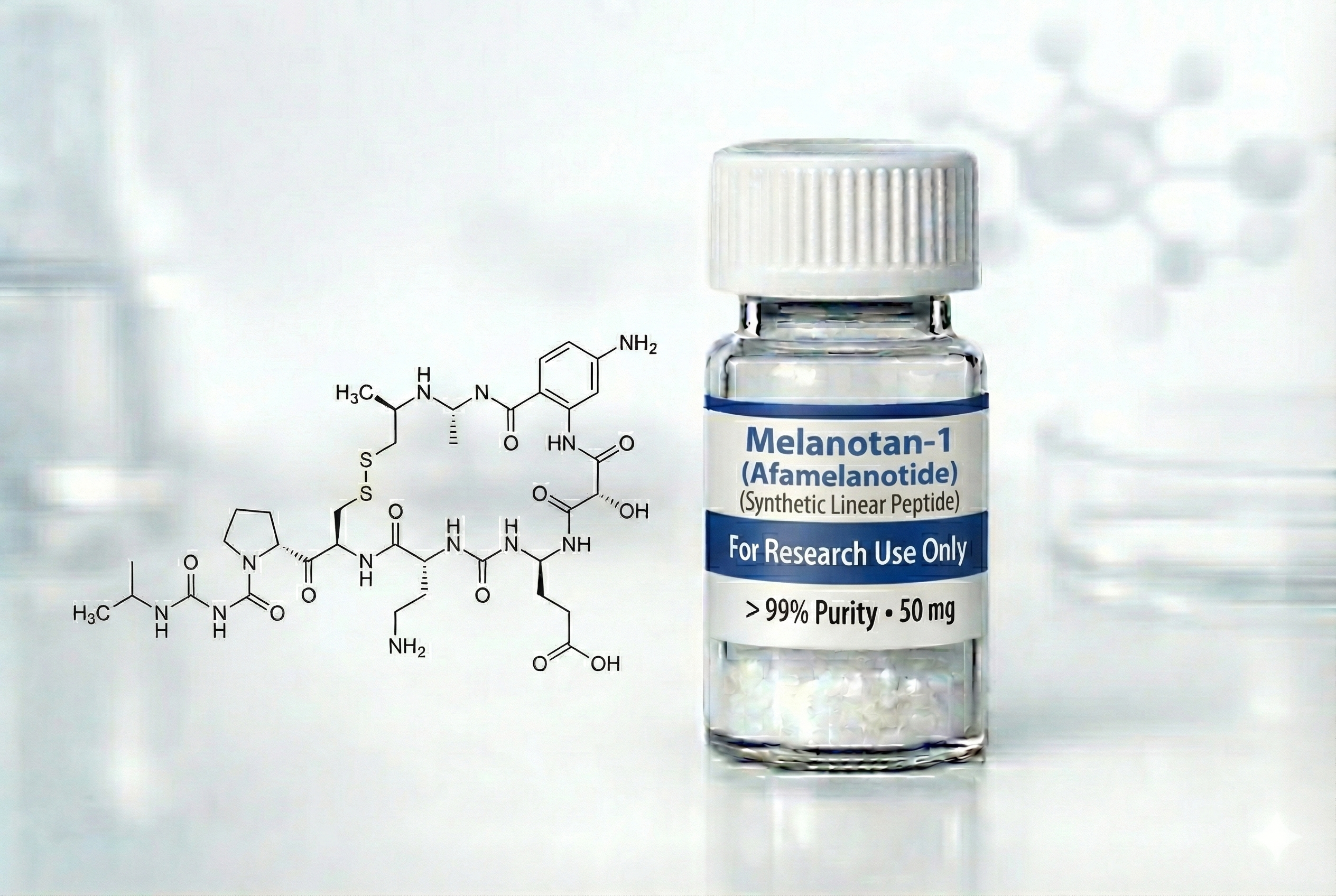
Melanotan-1 is a synthetic peptide modification of the endogenous hormone alpha-melanocyte stimulating hormone (α-MSH), a key regulator of pigmentation produced in the pituitary gland. Its chemical structure, chemically known as [Nle4, D-Phe7]-α-MSH, involves replacing the Met4 residue with Norleucine and the Phe7 residue with D-Phenylalanine.⁹ These structural modifications shield the peptide from rapid enzymatic breakdown, extending its half-life from mere minutes (for natural α-MSH) to a duration sufficient to therapeutically activate skin receptors.
Identity & Terminology:
- Generic Name: Afamelanotide (the International Nonproprietary Name used in medical literature).
- Research Name: Melanotan-1, MT-1, or sometimes “Melanotan I.”
- Structure: A linear tridecapeptide (13 amino acids), distinct from the shorter, cyclic structure of Melanotan-2.
Routes of Administration:
- Subcutaneous Injection: This is the standard and most effective method for cosmetic and research use. The peptide is typically sold as a sterile, freeze-dried (lyophilized) white powder in a glass vial. Users must reconstitute it with bacteriostatic water and administer it using an insulin syringe into fatty tissue (adipose), such as the abdomen. Because Melanotan-1 is less potent by weight than Melanotan-2, it often requires a “loading phase” of daily injections to reach saturation levels in the skin.¹⁰
- Nasal Spray: While occasionally marketed, the nasal bioavailability of linear peptides like Melanotan-1 is poor. The large molecule struggles to cross the nasal mucosa effectively, leading to inconsistent dosing and wasted product compared to injection.
Regulatory Status:
- FDA Status: Injectable Melanotan-1 for cosmetic tanning is not FDA-approved. The agency has issued warnings regarding unregulated “tanning shots,” citing concerns over sterility and the lack of oversight in the research chemical market.¹¹ While the molecule afamelanotide is medically approved in an implantable form for rare genetic disorders, the liquid injectable vials sold online are technically “research chemicals” not intended for human use.
- Availability: It is widely available through online peptide vendors, compounding pharmacies (in some jurisdictions), and anti-aging clinics operating in regulatory grey areas.
Reviews
There are no reviews yet.