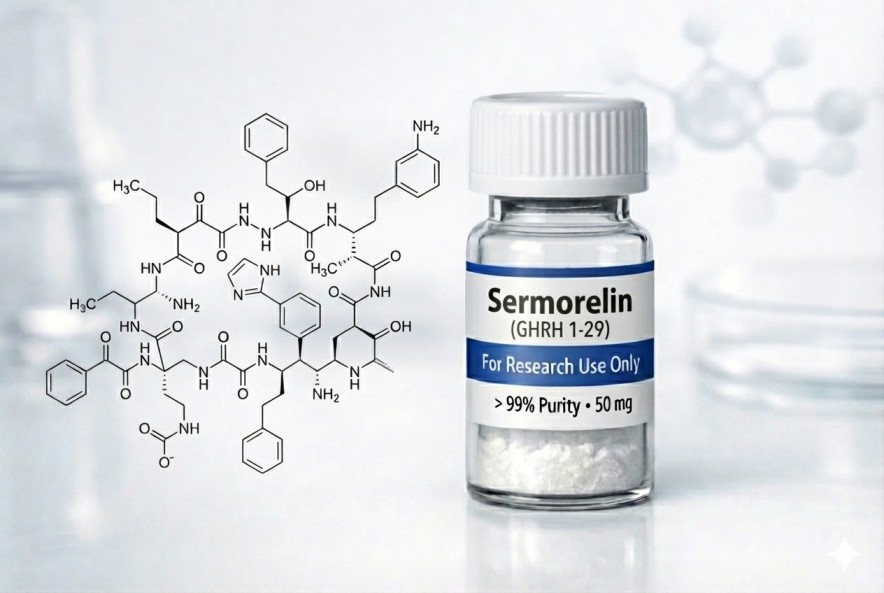
Sermorelin (GHRH 1-29)

Review article author: University of Maryland Center of Excellence in Regulatory Science and Innovation (M-CERSI) (2020)

Primary clinical studies: Ghigo E et al. (1996), Valetto MR et al. (1996)

Review article author: Walker RF (2006), Sigalos JT & Pastuszak AW (2018)

Sermorelin (also known as sermorelin acetate or GHRH 1-29) is a synthetic analog of the first 29 amino acids of human growth hormone-releasing hormone (GHRH), the naturally occurring hypothalamic peptide that regulates growth hormone (GH) synthesis and secretion from the pituitary.¹ ² ³ Sermorelin was FDA-approved in 1990 and 1997 as Geref® for diagnostic testing of pituitary GH secretory capacity and treatment of pediatric growth hormone deficiency, representing the first FDA-approved GHRH analog.¹ ⁴ However, the manufacturer voluntarily discontinued Geref® in 2008 for commercial reasons not related to safety or efficacy concerns, leaving compounding pharmacies as the sole source of sermorelin.¹ A comprehensive 2020 systematic review conducted for the FDA identified only 2 human clinical trials meeting inclusion criteria—both examining sermorelin combined with arginine as a diagnostic test for adult GH deficiency rather than therapeutic applications.¹ ⁵ ⁶ Subject matter expert interviews revealed that sermorelin is primarily used off-label in combination with growth hormone-releasing peptides (GHRP-2, GHRP-6) for patients with hypogonadal symptoms and low IGF-I levels, though experts acknowledged “limited outcomes-based human research” making it difficult to determine ideal dosing and long-term effects.¹ As of 2026, sermorelin is not available as an FDA-approved product in any country surveyed, with all current clinical use occurring through compounding pharmacies based on its previous regulatory approval and theoretical advantages over recombinant GH therapy.¹ ²

$155.00

- +

Description:

Sermorelin is a 29-amino acid synthetic peptide identical to the N-terminal segment of naturally occurring 44-amino acid human growth hormone-releasing hormone (GHRH 1-44).¹ ² ³ This N-terminal fragment retains full biological activity of native GHRH, as the first 29 amino acids comprise the “bioactive core” responsible for binding and activating the GHRH receptor (GHRH-R) on pituitary somatotroph cells.² ³ The shorter sequence offers advantages including easier synthesis, reduced manufacturing complexity, and lower immunogenicity compared to full-length GHRH 1-44.²

Sermorelin functions by binding to GHRH-R on anterior pituitary somatotrophs, activating G-protein coupled signaling cascades involving cyclic AMP (cAMP) production and protein kinase A (PKA) pathways.² ³ This stimulates both immediate GH release from stored granules and upregulation of GH gene transcription, maintaining pituitary GH synthetic capacity.² ³ Unlike exogenous recombinant GH which provides constant, non-physiological hormone levels and suppresses endogenous production, sermorelin preserves the body’s natural pulsatile GH secretion pattern regulated by negative feedback via somatostatin and IGF-I.² ³

**FDA Approval History:**¹ ⁴

  • December 1990: FDA approved sermorelin injection (0.05 mg base/amp) under NDA 19-863 for diagnostic testing of pituitary GH secretory capacity
  • September 1997: FDA approved sermorelin acetate injection (0.5 mg and 1.0 mg base/vial) as Geref® under NDA 20-443 for treatment of children with idiopathic growth hormone deficiency who have growth failure
  • December 2008: EMD Serono voluntarily discontinued manufacturing Geref® for commercial reasons, not related to safety or efficacy. FDA moved product to “Discontinued Drug Product List”

The manufacturer’s stated reason for discontinuation was commercial rather than medical—the company was also producing recombinant GH and “didn’t want to compete with themselves,” according to subject matter expert interviews.¹ The discontinuation eliminated the only FDA-approved GHRH product from the US market.¹

**Pharmacological Characteristics:**¹ ²

Short Half-Life: Sermorelin has a plasma half-life of approximately 10-20 minutes due to rapid enzymatic degradation by dipeptidyl peptidase-IV (DPP-IV) and other peptidases.² This brief duration results in transient GH stimulation, with GH levels returning toward baseline within 2-4 hours following administration.²

Poor Oral Bioavailability: As a peptide, sermorelin is susceptible to gastrointestinal degradation, requiring parenteral (injectable) administration—typically subcutaneous, though intravenous routes were used in clinical trials.¹ ²

Once-Daily Dosing: Despite the short half-life, sermorelin can be administered once daily (typically at bedtime) to capitalize on nocturnal GH pulses when the GH pathway is most active.¹ This represents an advantage over other GH secretagogues requiring multiple daily injections.¹

A comprehensive 2020 systematic review conducted by the University of Maryland for the FDA found only 2 clinical trials meeting inclusion criteria for sermorelin therapeutic use—both examining diagnostic testing for adult GH deficiency rather than treatment efficacy.¹ ⁵ ⁶ Zero survey respondents from professional medical associations reported using sermorelin, suggesting its use is confined to specialized practices outside mainstream endocrinology.¹


How It Works


Mechanism of Action

Sermorelin operates through the GHRH receptor signaling pathway on pituitary somatotroph cells:¹ ² ³

GHRH Receptor Activation: Upon binding to GHRH-R, a seven-transmembrane domain G-protein coupled receptor, sermorelin activates adenylyl cyclase through Gs proteins, increasing intracellular cAMP concentrations.² ³ Elevated cAMP activates protein kinase A (PKA), which phosphorylates transcription factors including cAMP response element-binding protein (CREB).² This cascade upregulates GH gene transcription and stimulates immediate GH secretion from stored granules.²

Pituitary Gene Transcription: A unique advantage of sermorelin over exogenous GH is stimulation of pituitary gene transcription of GH messenger RNA, increasing pituitary GH reserves and preserving the growth hormone neuroendocrine axis.² ³ This “pituitary recrudescence” may help slow the cascade of hypophyseal hormone failure that occurs during aging, maintaining not only youthful anatomy but also physiological feedback mechanisms.³

Preserved Pulsatile Secretion: Unlike exogenous GH administration which provides constant, non-physiological hormone levels and suppresses endogenous production through negative feedback, sermorelin stimulates the body’s own pulsatile GH secretion pattern.² ³ This pulsatility is critical for normal GH function and maintains negative feedback regulation through somatostatin and IGF-I, preventing the supratherapeutic levels associated with recombinant GH therapy complications (edema, carpal tunnel syndrome, glucose intolerance).² ³

Negative Feedback Regulation: Because sermorelin works through physiological pathways subject to negative feedback, “overdoses of endogenous hGH are difficult if not impossible to achieve,” according to Walker’s 2006 review.³ The interactive effects of sermorelin and somatostatin result in episodic or intermittent GH release rather than constant elevation, avoiding tachyphylaxis and receptor desensitization.³

Tachyphylaxis Avoidance: The non-“square wave” release pattern induced by sermorelin simulates normal physiology, preventing receptor downregulation and maintaining efficacy with chronic use—a problem that can occur with constant GH exposure.³

Synergy with GHRPs: When sermorelin is coadministered with growth hormone-releasing peptides (GHRP-2, GHRP-6) that act through the ghrelin receptor (GHS-R), they produce synergistic GH release substantially exceeding either compound alone.¹ ⁷ This complementary mechanism—sermorelin increasing GH synthesis and release amplitude through GHRH-R, GHRPs increasing the number of cells releasing GH and suppressing somatostatin through GHS-R—explains common combination protocols.¹ ⁷ However, SMEs acknowledged “a synergistic effect on the growth hormone pathway” with “limited data beyond cellular or animal studies and small non-outcomes based human studies,” making clinicians “less likely to give this combination since they do not know what outcome to expect.”¹

Diagnostic Use with Arginine: When sermorelin (GHRH) is combined with arginine, the two agents work through complementary mechanisms: GHRH triggers GH release from pituitary somatotrophs, while arginine potentiates this release by inhibiting hypothalamic somatostatin secretion.⁸ ⁹ In patients with pituitary GH deficiency, somatotroph cells are less responsive and fail to adequately release GH in response to this combined stimulation.⁸

IGF-I Production: Pulsatile GH elevation stimulates hepatic and peripheral tissue production of insulin-like growth factor-I (IGF-I), the primary mediator of GH’s anabolic effects.¹ ² Due to GH’s extremely short half-life (2-3 minutes), IGF-I serves as a practical surrogate marker to assess GH pathway activation and treatment efficacy.¹ SMEs noted that treatment is typically considered when baseline IGF-I levels are below 150 ng/mL.¹

Physiological Effects

The downstream effects of GH and IGF-I elevation include:¹ ² ³

  • Body Composition: Increased lean body mass and reduced fat mass (particularly visceral) through enhanced protein synthesis and lipolysis
  • Growth: Increased height velocity in children with growth impairment (FDA-approved indication, though product discontinued)¹
  • Bone Metabolism: Enhanced bone turnover and potential improvements in bone mineral density
  • Metabolic Effects: Complex effects on glucose and lipid metabolism; need for monitoring in susceptible individuals²
  • Pituitary Preservation: Maintained growth hormone neuroendocrine axis function that typically declines with aging³
  • Physical Appearance: SMEs noted patients seek sermorelin for improvements in “skin, hair, or body” appearance¹

Research Evidence


Comprehensive Systematic Review

University of Maryland Center of Excellence in Regulatory Science and Innovation (M-CERSI), 2020 – Sermorelin acetate: Summary Report for FDA 503B Bulks List Evaluation

*Comprehensive scoping review examining clinical use of sermorelin acetate to assist FDA in evaluating inclusion on the 503B Bulks List for compounding.*¹

**Systematic Literature Review Methodology:**¹

  • Comprehensive search of Ovid MEDLINE and Embase databases through February 3, 2020
  • PRISMA-compliant systematic review process
  • Inclusion criteria: Studies using sermorelin in nominated dosage forms/routes to diagnose, prevent, or treat any condition
  • Two independent reviewers screened 466 titles/abstracts after deduplication
  • 65 full-text articles reviewed

**Results:**¹

  • Total studies included: 2
  • Reasons for exclusions: Sermorelin used as brand/proprietary product (47 studies); wrong study design (13); wrong substance (2); wrong indication (1)
  • Total patients treated: 279 received sermorelin acetate
  • Study countries: Both studies conducted in Italy
  • Publication year: Both studies published in 1996
  • Indication studied: Diagnosis of growth hormone deficiency in adults (not therapeutic use)

Key Finding: Sermorelin is not available as an FDA-approved product in any dosage form or route. Sermorelin is not available in any of the 13 foreign national registries searched (Canada, EU, UK, Ireland, Belgium, Latvia, Australia, New Zealand, Saudi Arabia, Abu Dhabi, Hong Kong, Namibia).¹

**Historical Context from Excluded Studies:**¹ ⁸ ⁹

The review identified valuable context from excluded studies:

Diagnostic Testing: Sermorelin (GHRH) combined with arginine (GHRH-ARG test) was considered a more reliable alternative for diagnosing adult GH deficiency compared to the insulin tolerance test (ITT), offering advantages including:⁸

  • Safety: No risk of induced hypoglycemia (ITT can cause dangerous neuroglycopenia requiring close medical supervision)
  • Convenience: Suitable for office-based testing without intensive monitoring
  • Contraindications: ITT cannot be used in patients with seizure disorders or ischemic heart disease; sermorelin-arginine has no such contraindications
  • Reproducibility: More consistent results across testing occasions

Mechanism for Diagnostic Use: In healthy individuals, GHRH triggers GH release from pituitary somatotrophs while arginine potentiates this by inhibiting hypothalamic somatostatin.⁸ ⁹ In patients with pituitary GH deficiency, somatotroph cells are less responsive and fail to adequately release GH in response to this combined stimulation.⁸ ⁹

Alternative Diagnostic: Following sermorelin discontinuation in 2008, macimorelin (Macrilen®) was FDA-approved for diagnosis of adult GH deficiency and is being studied for pediatric use.¹ The glucagon stimulation test provides another alternative.⁸

**Subject Matter Expert Interviews (N=4 SMEs):**¹

Historical Development and Discontinuation:

  • Geref® (sermorelin) was developed as a “very short-acting GHRH” by EMD Serono¹
  • GHRH acts on GHRH receptor, producing different effects than ghrelin receptor activation¹
  • Manufacturer discontinued sermorelin because “Serono was also making growth hormone so they didn’t want to compete with themselves”¹
  • “The only gap in the market since sermorelin stopped getting produced was from a testing point of view,” now filled by macimorelin¹

Current Clinical Use:

  • Used in patients with hypogonadal symptoms and low or borderline IGF-I levels¹
  • Used to help patients with weight loss or improve sperm counts in very heavy men¹
  • Typical dosing: 100-500 mcg/day injectable; can reach 1000 mcg/day¹
  • Can be administered once daily (typically at night when GH pathway most active), unlike GHRPs requiring multiple daily doses¹
  • “It takes a while for IGF-1 to increase” in response to treatment¹
  • “It’s very hard to overshoot” due to intact feedback mechanisms¹

Combination Therapy:

  • SMEs discussed combination with GHRP-2 and GHRP-6: “a synergistic effect on the growth hormone pathway”¹
  • However, “there has not been a lot of data beyond cellular or animal studies and small non-outcomes based human studies”¹
  • “As a result, clinicians are less likely to give this combination since they do not know what outcome to expect”¹

Current Access:

  • “Currently the only way to access sermorelin, along with other growth hormone secretagogues, is through a compounding pharmacy”¹
  • “Sermorelin is not being produced by the outsourcing facility anymore because it is not on the category one list and I don’t think it will be any time soon”¹

**Survey Results:**¹

  • Zero people responded to surveys distributed via professional medical associations
  • Complete absence of responses suggests extremely limited adoption in mainstream medical practice

**Conclusion:**¹
“From the literature review and interviews, sermorelin acetate was previously available as an FDA-approved product Geref® before being discontinued in 2008 for reasons not related to safety or efficacy. When administered with arginine, sermorelin was considered to be a more reliable alternative for diagnosing adult GHD when compared to the gold standard, the ITT. Besides reliability, concerns about safety may make some practitioners less likely to use the ITT… With sermorelin acetate no longer available as an FDA-approved product, compounding and outsourcing facilities are the only ways for practitioners to obtain sermorelin acetate.”

Significance: This FDA-commissioned review demonstrates that despite previous FDA approval, minimal clinical trial evidence supports current off-label therapeutic uses of sermorelin.¹ The 2 included studies examined diagnostic testing rather than treatment, leaving zero qualifying therapeutic trials.¹ Current use occurs entirely through compounding based on the compound’s previous regulatory status and theoretical advantages, not clinical efficacy data.¹

Primary Diagnostic Studies

Ghigo E et al., 1996 – New approach to the diagnosis of growth hormone deficiency in adults

Design: Study examining diagnostic value of pyridostigmine (PD) + GHRH and arginine (ARG) + GHRH tests in 54 patients with hypopituitarism and 326 healthy adults.⁵

**Study Population:**⁵

  • 54 patients with hypopituitarism (44% male, age range 20-80 years)
  • 326 healthy adults (30% male, age range 20-80 years)
  • Total: 380 participants

**Interventions Compared:**⁵

  • IGF-I measurement (N=380)
  • Pyridostigmine + GHRH (N=127)
  • Arginine + GHRH (N=113)

*Results:*⁵

  • IGF-I measurement: Reliable in young adults but diminished reliability with aging
  • PD + GHRH: Reliable in young adults but reliability declined with age
  • ARG + GHRH: Most consistent diagnostic performance throughout adult lifespan
  • Patient compliance and safety: ARG + GHRH rated most appropriate for patient compliance and safety

Valetto MR et al., 1996 – Reproducibility of the growth hormone response to stimulation with growth hormone-releasing hormone plus arginine during lifespan

Design: Study examining reproducibility of ARG + GHRH test across age groups and in GH-deficient patients.⁶

**Study Population:**⁶

  • 10 normal children (60% male, mean 12±0.9 years)
  • 18 normal young adults (56% male, mean 31.1±1.3 years)
  • 12 elderly patients (17% male, mean 74.4±1.8 years)
  • 15 patients with panhypopituitarism GH deficiency (60% male, mean 40.9±4.1 years)
  • Total: 55 participants

*Results:*⁶

  • Clear normal limits: ARG + GHRH test established clear cutoffs for normal vs. deficient GH response
  • Reproducibility: Consistent results across repeated testing occasions
  • Conclusion: “ARG + GHRH has clear normal limits and reproducibility and confirms the hypothesis that it is the first choice to diagnose GH deficiency in adults”⁶

Combined Significance: These two Italian studies established sermorelin (GHRH) + arginine as a reliable, safe, and reproducible diagnostic test for adult GH deficiency.⁵ ⁶ However, both studies examined diagnostic testing rather than therapeutic efficacy, providing no evidence for treatment applications that drive current off-label use.¹

Clinical Perspective on Therapeutic Use

Walker RF, 2006 – Sermorelin: A better approach to management of adult-onset growth hormone insufficiency?

*Editorial discussing theoretical advantages of sermorelin over recombinant GH for adult-onset GH insufficiency.*³

**Theoretical Advantages of Sermorelin:**³

Regulated by Negative Feedback: Effects regulated by somatostatin negative feedback, making overdoses of endogenous GH “difficult if not impossible to achieve,” unlike exogenous recombinant GH administration.³

Episodic Release: Pulsatile rather than constant GH exposure more closely mimics normal physiology.³

Tachyphylaxis Avoidance: Non-“square wave” release pattern prevents receptor desensitization and maintains long-term efficacy.³

Pituitary Gene Transcription: Stimulates pituitary GH mRNA transcription, increasing pituitary reserve and preserving the growth hormone neuroendocrine axis that typically declines with aging.³

Pituitary Recrudescence: May slow the cascade of hypophyseal hormone failure during aging, preserving both youthful anatomy and physiology.³

Legal Considerations: Unlike recombinant GH which has strict FDA restrictions (approved only for diagnosed GH deficiency and AIDS-related wasting), GHRH analogs can be prescribed off-label for age-related GH decline—though this occurred before the 2008 discontinuation of Geref®.³

**Limitations Acknowledged:**³

  • Requires intact pituitary function and GHRH responsiveness (ineffective in primary pituitary disorders)
  • Injection requirement creates compliance challenges
  • Individual response variability based on age, pituitary reserve, and baseline GH status

Significance: Walker’s editorial provides the theoretical rationale for sermorelin use in adult GH insufficiency but acknowledges it reflects “expert opinion” rather than clinical trial evidence.³ The discontinuation of Geref® two years after this publication eliminated FDA-approved sermorelin availability.¹

Broader GH Secretagogue Context

Sigalos JT & Pastuszak AW, 2018 – The Safety and Efficacy of Growth Hormone Secretagogues

*Systematic review of GH secretagogues providing context for sermorelin within the broader class.*²

**Key Points:**²

  • GH secretagogues preserve pulsatile GH release subject to negative feedback, theoretically avoiding supratherapeutic levels associated with recombinant GH
  • Sermorelin (GHRH 1-29) was FDA-approved but discontinued; shorter half-life than modified analogs like CJC-1295 with DAC
  • Combination of GHRH analogs with GHRPs produces synergistic GH elevation through complementary mechanisms
  • Evidence base focuses predominantly on biomarker changes (GH, IGF-I elevation) rather than functional outcomes across the secretagogue class
  • Long-term safety data insufficient for chronic use
  • Glucose metabolism concerns: GH elevation can increase insulin resistance

Current Status & Considerations


Research Status

As of January 2026, sermorelin is not available as an FDA-approved product and is not approved in any of the 13 countries/regions surveyed by the University of Maryland review.¹ The voluntary discontinuation of Geref® in 2008 left compounding pharmacies as the sole source of sermorelin.¹

Sermorelin occupies a unique position—previously FDA-approved, establishing regulatory precedent for safety and efficacy in its approved indications (pediatric GH deficiency, diagnostic testing), but currently available only through compounding.¹ This previous approval distinguishes sermorelin from never-approved peptides like GHRP-6, providing historical regulatory support while lacking current commercial availability.¹

The FDA-commissioned systematic review found only 2 qualifying clinical trials—both examining diagnostic testing for adult GH deficiency rather than therapeutic applications.¹ ⁵ ⁶ Zero survey respondents from professional medical associations reported using sermorelin, suggesting use is confined to specialized practices outside mainstream endocrinology.¹ Current therapeutic use occurs entirely off-label based on theoretical advantages and previous regulatory approval, not clinical efficacy trials for current applications.¹

Potential Research Applications

Age-Related GH Decline: Walker’s 2006 editorial positioned sermorelin as potentially superior to recombinant GH for age-related GH insufficiency, citing preserved feedback regulation, pulsatile secretion, and pituitary preservation.³ However, these theoretical advantages lack validation through controlled clinical trials comparing sermorelin to recombinant GH or placebo for body composition, quality of life, or functional outcomes in aging adults.¹ ³

Growth Hormone Deficiency: Sermorelin was FDA-approved for pediatric GH deficiency, though the product is no longer commercially available.¹ ⁴ For documented GH deficiency, FDA-approved recombinant GH remains the evidence-based standard of care with established dosing, monitoring protocols, and long-term safety data.²

Body Composition Optimization: SME interviews revealed off-label use in patients with hypogonadal symptoms and low IGF-I seeking weight loss or improved body composition.¹ However, the University of Maryland review found zero clinical trials examining sermorelin for body composition in any population.¹ The Sigalos 2017 study examined a triple-combination (GHRP-2 / GHRP-6 / sermorelin) that increased IGF-I but measured no functional outcomes.¹ ⁷

Combination Protocols: SMEs discussed combining sermorelin with GHRP-2 and/or GHRP-6 based on synergistic GH release, but acknowledged “limited data beyond cellular or animal studies and small non-outcomes based human studies,” making them “less likely to give this combination since they do not know what outcome to expect.”¹ The Sigalos 2017 study remains the only published data on this combination, showing IGF-I elevation in 14 hypogonadal men without functional outcome measures.¹ ⁷

Diagnostic Testing: The two included studies established sermorelin + arginine as a reliable diagnostic for adult GH deficiency, offering safety and convenience advantages over insulin tolerance testing.¹ ⁵ ⁶ However, sermorelin’s discontinuation eliminated this application, now replaced by macimorelin (Macrilen®), an FDA-approved oral GH secretagogue for diagnostic use.¹

Safety Profile Summary

Based on FDA approval history and limited published studies:¹ ³ ⁴ ⁵ ⁶

FDA Approval Precedent: Sermorelin received FDA approval in 1990 and 1997, establishing acceptable safety profile for approved indications (pediatric GH deficiency, diagnostic testing).¹ ⁴ Voluntary discontinuation in 2008 was “not for reasons related to safety or efficacy,” providing regulatory assurance.¹

**Diagnostic Study Safety (N=435 across 2 studies):**⁵ ⁶

  • Well-tolerated in diagnostic testing protocols
  • Arginine + GHRH combination rated as “most appropriate for patient compliance and safety”⁵
  • No serious adverse events reported in diagnostic studies

**Theoretical Safety Advantages:**³

  • Regulated by negative feedback: “overdoses of endogenous hGH are difficult if not impossible to achieve”³
  • Pulsatile vs. constant exposure: avoids tachyphylaxis and receptor desensitization³
  • Preserved physiological feedback: “it’s very hard to overshoot” per SME interviews¹

**Critical Safety Gaps:**¹ ²

  • No long-term therapeutic trials: Zero studies examining chronic sermorelin treatment for body composition, anti-aging, or off-label applications¹
  • Pediatric approval vs. adult use: FDA approval was for pediatric GH deficiency; extrapolation to adult applications lacks supporting data¹
  • IGF-I and cancer risk: Theoretical concerns about sustained IGF-I elevation and malignancy unaddressed by available evidence²
  • Glucose metabolism: GH antagonizes insulin; long-term effects on glucose tolerance unknown for chronic use²
  • Combination safety: Zero safety data for commonly used sermorelin + GHRP combinations despite SME reports of widespread use¹

Important Considerations

Previous FDA Approval ≠ Current Evidence: While sermorelin’s previous FDA approval establishes historical regulatory support, this approval was for pediatric GH deficiency and diagnostic testing—not the adult body composition and anti-aging applications driving current off-label use.¹ ⁴ The University of Maryland review found zero therapeutic trials for current applications.¹

Discontinued for Commercial Reasons: The manufacturer voluntarily discontinued sermorelin “not for reasons related to safety or efficacy,” but reportedly because “Serono was also making growth hormone so they didn’t want to compete with themselves.”¹ This commercial decision, not medical concerns, eliminated the only FDA-approved GHRH product from the market.¹

Compounding as Sole Source: With Geref® discontinued, “compounding and outsourcing facilities are the only ways for practitioners to obtain sermorelin acetate,” though SMEs noted “sermorelin is not being produced by the outsourcing facility anymore because it is not on the category one list.”¹ This creates quality, purity, and consistency concerns without FDA oversight.¹

Diagnostic Studies ≠ Therapeutic Evidence: Both studies meeting University of Maryland inclusion criteria examined diagnostic testing, not treatment.¹ ⁵ ⁶ The ability to stimulate acute GH release for diagnostic purposes does not establish that chronic sermorelin administration produces clinically meaningful functional benefits.¹

Theoretical Advantages Unproven: Walker’s 2006 editorial articulated compelling theoretical advantages of sermorelin over recombinant GH—preserved feedback, pulsatile secretion, pituitary preservation.³ However, these remain theoretical; no controlled trials have compared sermorelin to recombinant GH or placebo for functional outcomes in the populations using it off-label.¹ ³

Combination Use Lacks Evidence: SMEs acknowledged that while sermorelin + GHRP combinations have “a synergistic effect on the growth hormone pathway,” there is “limited data beyond cellular or animal studies and small non-outcomes based human studies.”¹ Clinicians are “less likely to give this combination since they do not know what outcome to expect.”¹ The single published combination study showed IGF-I elevation without functional outcomes.¹ ⁷

Once-Daily Dosing Advantage: Sermorelin can be administered once daily (typically at night), unlike GHRPs requiring 2-3 daily injections.¹ This offers practical advantages for compliance and quality of life, though whether this translates to superior outcomes remains uninvestigated.¹

Dosing Based on Clinical Experience: SMEs reported typical dosing of 100-500 mcg/day, reaching up to 1000 mcg/day, with practitioners tracking IGF-I levels and adjusting doses based on these biomarkers rather than evidence-based protocols.¹ All dosing derives from clinical experience, not dose-finding trials for current applications.¹

“It Takes a While” for Effects: SMEs noted “it takes a while for IGF-1 to increase” in response to sermorelin treatment, suggesting patience is required to assess response.¹ However, without controlled trials measuring functional outcomes, the timeline and magnitude of meaningful clinical benefits remain speculative.¹

Pituitary Dependence: Like all GHRH analogs, sermorelin requires intact pituitary function and GHRH responsiveness.² ³ Individuals with primary pituitary disorders, pituitary tumors, history of pituitary surgery, or pituitary radiation will not respond to GHRH stimulation and require recombinant GH if treatment is indicated.³

Zero Mainstream Adoption: The complete absence of survey responses from professional medical associations confirms that sermorelin use is essentially absent from mainstream medical practice.¹ Current use occurs in specialized practices (urology, naturopathy, anti-aging clinics) focused on off-label applications.¹

Alternative Diagnostic Available: For the diagnostic application where sermorelin had strongest evidence, macimorelin (Macrilen®) is now FDA-approved for diagnosis of adult GH deficiency and is being studied for pediatric use.¹ This eliminates the “only gap in the market since sermorelin stopped getting produced,” per SME interviews.¹

Regulatory and Legal Status: While sermorelin was previously FDA-approved, current use through compounding occurs in regulatory gray zones without FDA oversight of product quality or established clinical guidelines for off-label applications.¹ Prescribing is prohibited by WADA for competitive athletes.²

Alternative Approaches Exist: For documented GH deficiency, FDA-approved recombinant GH provides evidence-based treatment.² For body composition and anti-aging applications, no peptide-based approach has sufficient evidence to recommend over proven interventions (progressive resistance training, adequate protein, sleep optimization, management of chronic diseases) with established efficacy and safety.²


Footnotes


  1. University of Maryland Center of Excellence in Regulatory Science and Innovation (M-CERSI). Sermorelin acetate: Summary Report prepared for Food and Drug Administration. December 2020.
  2. Sigalos JT, Pastuszak AW. The Safety and Efficacy of Growth Hormone Secretagogues. Sexual Medicine Reviews. 2018;6(1):45-53.
  3. Walker RF. Sermorelin: A better approach to management of adult-onset growth hormone insufficiency? Clinical Interventions in Aging. 2006;1(4):307-308.
  4. FDA Approval History: NDA 19-863 (December 1990) and NDA 20-443 (September 1997) for Geref® (sermorelin acetate); voluntarily discontinued December 2008.
  5. Ghigo E, Aimaretti G, Gianotti L, Bellone J, Arvat E, Camanni F. New approach to the diagnosis of growth hormone deficiency in adults. European Journal of Endocrinology. 1996;134(3):352-356.
  6. Valetto MR, Bellone J, Baffoni C, et al. Reproducibility of the growth hormone response to stimulation with growth hormone-releasing hormone plus arginine during lifespan. European Journal of Endocrinology. 1996;135(5):568-572.
  7. Sigalos JT, Pastuszak AW, Allison A, et al. Growth hormone secretagogue treatment in hypogonadal men raises serum insulin-like growth factor-1 levels. American Journal of Men’s Health. 2017;11(6):1752-1758.
  8. Yuen KC, Biller BM, Molitch ME, Cook DM. Clinical review: Is lack of recombinant growth hormone (GH)-releasing hormone in the United States a setback or time to consider glucagon testing for adult GH deficiency? Journal of Clinical Endocrinology & Metabolism. 2009;94(8):2702-2707.
  9. Popovic V, Leal A, Micic D, et al. GH-releasing hormone and GH-releasing peptide-6 for diagnostic testing in GH-deficient adults. Lancet. 2000;356(9236):1137-1142.

References


Comprehensive Systematic Review

University of Maryland Center of Excellence in Regulatory Science and Innovation (M-CERSI). Sermorelin acetate: Summary Report prepared for Food and Drug Administration, Clinical use of bulk drug substances nominated for inclusion on the 503B Bulks List. Grant number: 5U01FD005946. December 2020.

Primary Diagnostic Studies

Ghigo E, Aimaretti G, Gianotti L, Bellone J, Arvat E, Camanni F. New approach to the diagnosis of growth hormone deficiency in adults. European Journal of Endocrinology. 1996;134(3):352-356. doi:10.1530/eje.0.1340352. PMID: 8616534.

Valetto MR, Bellone J, Baffoni C, et al. Reproducibility of the growth hormone response to stimulation with growth hormone-releasing hormone plus arginine during lifespan. European Journal of Endocrinology. 1996;135(5):568-572. doi:10.1530/eje.0.1350568.

Clinical Perspectives

Walker RF. Sermorelin: A better approach to management of adult-onset growth hormone insufficiency? Clinical Interventions in Aging. 2006;1(4):307-308. doi:10.2147/ciia.2006.1.4.307. PMID: 18046908.

Broader GH Secretagogue Reviews

Sigalos JT, Pastuszak AW. The Safety and Efficacy of Growth Hormone Secretagogues. Sexual Medicine Reviews. 2018;6(1):45-53. doi:10.1016/j.sxmr.2017.02.004. PMID: 28400207.

Additional Studies

Sigalos JT, Pastuszak AW, Allison A, et al. Growth hormone secretagogue treatment in hypogonadal men raises serum insulin-like growth factor-1 levels. American Journal of Men’s Health. 2017;11(6):1752-1758.

Yuen KC, Biller BM, Molitch ME, Cook DM. Clinical review: Is lack of recombinant growth hormone (GH)-releasing hormone in the United States a setback or time to consider glucagon testing for adult GH deficiency? Journal of Clinical Endocrinology & Metabolism. 2009;94(8):2702-2707.

Popovic V, Leal A, Micic D, et al. GH-releasing hormone and GH-releasing peptide-6 for diagnostic testing in GH-deficient adults. Lancet. 2000;356(9236):1137-1142.


Disclaimer


This content is for educational and research purposes only and does not constitute medical advice. While sermorelin (as Geref®) was previously FDA-approved for pediatric growth hormone deficiency and diagnostic testing, the product was voluntarily discontinued in 2008 for commercial reasons. Sermorelin is not currently available as an FDA-approved product in any country surveyed by comprehensive regulatory review. A 2020 FDA-commissioned systematic review identified only 2 clinical trials meeting inclusion criteria—both examining diagnostic testing rather than therapeutic applications. Current off-label therapeutic use occurs entirely through compounding pharmacies without supporting clinical trial evidence for body composition, anti-aging, or other common applications. Subject matter experts acknowledge “limited outcomes-based human research” making it difficult to determine “the ideal combination and dose of medication to use, and the effects of long-term use.” All products are intended strictly for laboratory research and development purposes only.


Latest News

Latest Research Updates

Curated news and publications on peptides, metabolic research, and cellular energy modulation.
Sermorelin (GHRH 1-29)Sermorelin (GHRH 1-29)
$155.00
- +